
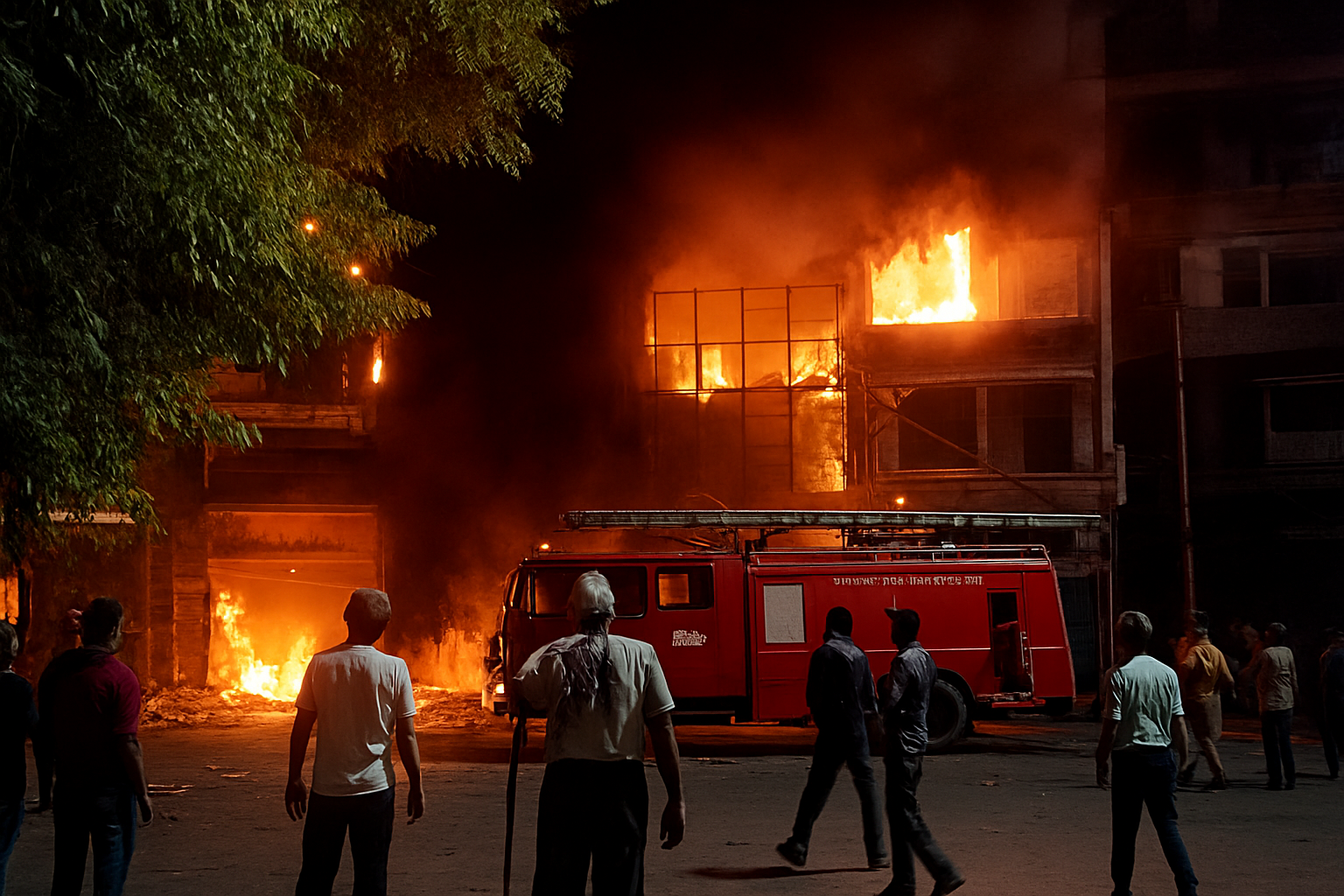
On August 18, 2025, a devastating fire broke out at Mahajan Electronics, a popular electronics shop located in the bustling Raja Garden Chowk area of West Delhi. The blaze, which began suddenly during the afternoon, resulted in the deaths of four young employees and left another in critical condition.
While the flames themselves were controlled within an hour, the real killer was not fire but smoke inhalation. Thick, toxic fumes spread rapidly through the windowless, enclosed shop floor, leaving trapped employees with no time or escape route. This incident has shaken Delhi once again, reviving urgent debates over fire safety compliance in commercial establishments.
The Building: A Death Trap
The structure that housed Mahajan Electronics turned into a chimney of smoke during the fire. According to firefighters:
-
The showroom had no proper windows or ventilation.
-
The escape routes were limited and allegedly obstructed.
-
The interior was packed with electronic goods, wires, and packaging materials—all highly combustible, producing thick, toxic smoke.
A senior DFS official commented:
“The victims did not die of burns. They suffocated within minutes. The space acted like a sealed box where smoke had nowhere to escape.”
Possible Cause
While investigations are ongoing, initial findings suggest a short circuit as the likely ignition source. Electrical sparks, followed by blackout and fire, align with witness statements.
Electronics shops, with heavy wiring, cooling systems, and extensive electrical load, are high-risk environments if circuits are not properly maintained. Combined with packaging, cardboard, and plastic materials, even a small fault can escalate into a toxic inferno.
Emergency Response and Challenges
Delhi Fire Services responded swiftly, arriving within minutes with five tenders. However, firefighters faced serious obstacles:
-
Dense Smoke: Entering the structure was extremely difficult due to heavy, choking smoke.
-
Poor Accessibility: With blocked staircases and no smoke vents, reaching the second floor required breaking through barriers.
-
Time Pressure: Victims succumbed within minutes, leaving firefighters racing against time.
Despite best efforts, smoke claimed lives before physical rescue was possible.
Investigation Underway
Authorities have launched a probe focusing on:
-
Electrical Forensics – Determining whether a short circuit indeed triggered the blaze.
-
Safety Norms Compliance – Reviewing if the showroom adhered to fire safety approvals under Delhi Fire Service Act and National Building Code.
-
CCTV and Witness Accounts – Reconstructing the sequence of events.
-
Liability Assessment – Determining criminal negligence on part of the management or building owner.
The Delhi government has promised a comprehensive safety audit of similar commercial establishments in the city.
Larger Context: A Pattern of Negligence
Unfortunately, the Raja Garden fire is not an isolated tragedy. Over the past decade, Delhi has witnessed several deadly blazes in commercial and residential complexes where:
-
Electrical faults ignited flames.
-
Shops or warehouses lacked basic fire exits.
-
Fire extinguishers, alarms, or sprinklers were either absent or non-functional.
-
Poor enforcement allowed non-compliant buildings to operate freely.
These recurring disasters highlight the gap between safety laws and real-world practice.
Lessons and Recommendations
The key lessons from this incident can guide both policymakers and business owners:
-
Mandatory Safety Audits – Annual third-party inspections of wiring, equipment, and compliance with building codes.
-
Adequate Exits – Every floor should have at least two unobstructed exits with illuminated signage.
-
Ventilation Systems – Windowless structures must have mechanical ventilation and smoke exhaust systems.
-
Automatic Detection – Smoke detectors, fire alarms, and voice evacuation systems must be installed and regularly tested.
-
Sprinkler Protection – Especially in enclosed retail spaces, sprinklers are lifesaving.
-
Staff Preparedness – Employees must undergo evacuation drills and training in use of fire extinguishers.
-
Accountability – Owners must face strict penalties, including criminal charges, for operating unsafe premises.
Conclusion
The Raja Garden electronics shop fire is a grim reminder of how preventable tragedies unfold when safety norms are ignored. The ignition may have been a simple short circuit—but the real disaster was caused by lack of ventilation, absence of exits, and failure to enforce life-saving systems.
Four promising young lives were lost in minutes—not because of flames, but because they had no way out.
As Delhi mourns this tragedy, the larger question remains: How many more lives must be lost before fire safety is treated as a non-negotiable priority?
The answer lies in systemic enforcement, strict accountability, and public awareness. Unless authorities and business owners take urgent corrective action, Raja Garden will not be the last such headline.


