
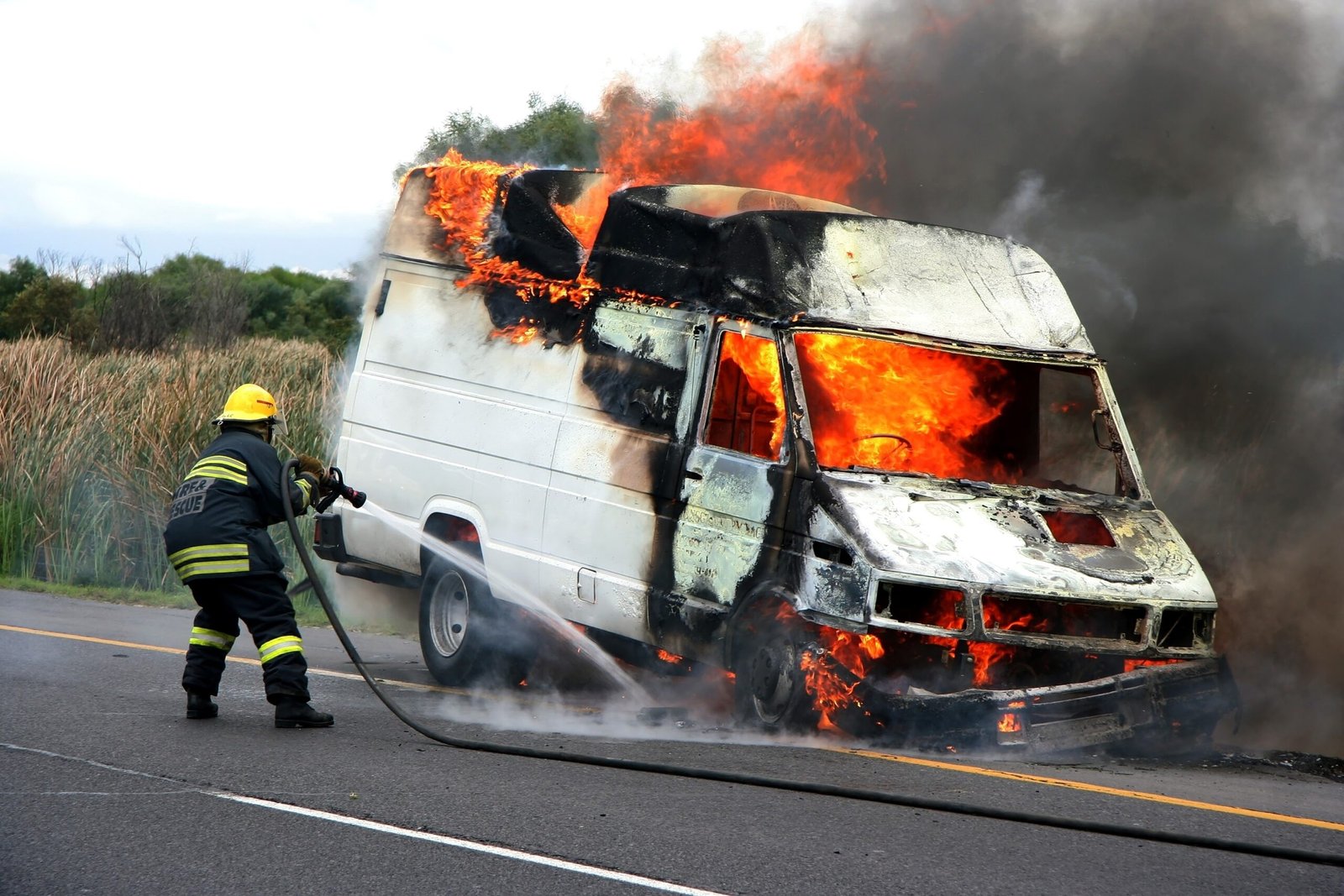
Vehicle fires in India are rising — and not because vehicles are unsafe, but because our environments, loads, modifications, and emergency awareness have not kept pace with modern fire dynamics. In today’s world, vehicle fire safety is no longer optional; it is essential for preventing tragedies. The Gujarat ambulance incident reminds us how urgently we need strong vehicle fire safety protocols. As we analyse this case, the question becomes clear: how can we strengthen vehicle fire safety for every ambulance, bus, and emergency vehicle on Indian roads?
The recent fire tragedy involving a Gujarat ambulance, where a newborn and medical team lost their lives, has once again highlighted a critical question:
Why are occupants unable to exit a small vehicle in time — and why do so many die before help even arrives?
As fire safety professionals, OEMs, first responders, and healthcare administrators, this incident is not just a news story.
It is a case study, a warning, and a call to strengthen systems such as ambulance fire prevention, bus fire safety measures, and overall emergency design.
1. Fire Behaviours Inside Vehicles: The Reality Most People Don’t Know
Understanding the causes of vehicle fires is the first step to preventing fatalities.
A vehicle cabin is a compact box filled with plastics, rubber, foam, wiring, and fabrics.
When ignition occurs:
-
Small fire → Flashover in 60–90 seconds
-
Temperatures reach 700–1200°C
-
Smoke becomes opaque, black, and toxic
-
One breath of hot gases (CO, HCN) can cause instant unconsciousness
This extreme speed is why many victims never reach the exit — not because they are trapped by metal, but because they are overpowered by toxic smoke before they can act.
2. Why Ambulances & Buses Become High-Fatality Zones
A. Single, Difficult-to-Access Exit
Most ambulances have:
-
Rear double doors (primary patient entry)
-
A small sliding side door (often blocked by equipment)
If fire originates at the rear, the only exit becomes unusable within seconds.
Buses make it worse:
-
One front door
-
Emergency windows often blocked
-
Electric doors jam after collision
B. Equipment & Layout Become Obstacles
Inside an ambulance:
-
Stretcher
-
Oxygen trolley
-
Ventilators
-
Cables
-
Bags
-
Cabinets
In an emergency, these create barriers that delay escape.
C. Oxygen-Intensified Fire
Oxygen does not burn — it makes everything else burn faster.
Even a small leak near a:
-
Regulator
-
Valve
-
Hose
-
Flow meter
Combined with a spark, it becomes a violent blowtorch effect.
D. Night-Time Travel
Most deadly incidents occur between 1 am and 4 am due to:
-
Driver fatigue
-
Occupants sleeping
-
Early warning signs ignored
E. Human Response Delay
Most people hesitate for 3–5 seconds when they sense:
-
Smell
-
Heat
-
Smoke
This hesitation can be fatal.
3. Why Occupants Don’t Sense the Danger Early
Most fires begin:
-
Under the ambulance floor
-
Inside wiring channels
-
In rear AC units
-
Near battery systems
-
Behind oxygen brackets
Smoke travels outward first, not into the cabin. By the time passengers notice it, it is already too late.
Additional factors:
-
Engine noise masks crackling
-
AC airflow masks smell
-
People assume “nothing serious”
-
Drivers continue driving for several seconds
These seconds determine life or death.
4. The Pattern Across All Major Vehicle Fire Tragedies in India
Analysis of more than 40 incidents across ambulances, school buses, sleeper coaches, tourist buses, SUVs, and vans shows the same pattern:
-
Ignition at rear or underbody
-
Rapid smoke build-up
-
Delayed driver response
-
Crowding near a single exit
-
Toxic smoke → unconsciousness → fatalities
These tragedies are preventable and repetitive under weak safety management.
5. Root Causes Professionals Must Recognize
Technical Causes
-
Oxygen system failure
-
Wiring short circuits
-
AC compressor fires
-
Fuel leakage
-
Friction heat in brakes
-
Poor battery management
Operational Causes
-
Non-certified modifications
-
Improper oxygen mounting
-
No preventive maintenance
-
No fire drills
-
Overloaded electrical ports
Behavioural Causes
-
Ignoring early signs
-
No evacuation culture
-
Panic and door crowding
-
Trying to save equipment instead of lives
6. Professional Remedies: What Must Change Immediately
A. Design Improvements
-
Minimum two exits in an ambulance
-
Accessible side exit
-
Flame-retardant interior materials
-
Automatic engine bay suppression
-
Heat/smoke alarms in patient cabin
-
Marked emergency exits
B. Oxygen System Safety
-
Isolated oxygen compartment
-
No oil/grease contact
-
Monthly leak test
-
Valve-off when transporting stable patients
-
Reverse-flow arrestors
C. Fire Safety Equipment
Every ambulance must include:
-
CO₂ + ABC extinguishers
-
Window hammer
-
Glow-in-dark exit map
-
Thermal blanket
D. Training & Drills
Staff must be trained for emergency fire response:
-
Identify burning smell
-
Stop vehicle within 5 seconds
-
Turn off ignition
-
Evacuate through a safe exit
-
Shut oxygen valve only if safe
-
Never open rear door if fire is behind
E. Maintenance Culture
-
Wiring checks
-
AC servicing
-
Oxygen cylinder certification
-
No illegal modifications
-
Pre-trip checklist
7. Evacuation Guidelines: What Actually Saves Lives
If You Are Inside an Ambulance
-
Shout: “Stop! Fire!”
-
Driver stops in 3–5 seconds
-
Use side door if rear is affected
-
Move 30–50 metres away
-
Extinguish only if safe
If a Bus Catches Fire
-
Wake passengers
-
Break windows using hammer
-
Hit corners of glass
-
Clear exits
-
Move away from vehicle
If Oxygen Cylinder Is Involved
-
Do NOT remove cylinder
-
Do NOT go near flames
-
Evacuate immediately
-
Maintain 50-metre distance
8. What India’s Ambulance & Transport Ecosystem Must Learn
Every tragedy is a message:
✔ Better engineering
✔ Better training
✔ Stronger evacuation culture
✔ Zero shortcuts in oxygen systems
✔ Zero tolerance for unsafe modifications
The Gujarat ambulance fire is a predictable outcome of multiple system failures—one that could have been avoided with strong vehicle fire safety planning.
Fire Safety Is Not a Cost — It Is a Responsibility
Lives are lost in seconds. Systems must respond in milliseconds.
For hospitals, ambulance operators, fire agencies, and transport bodies, the message is clear:
A fire-safe vehicle is not optional.It is life support on wheels.


