
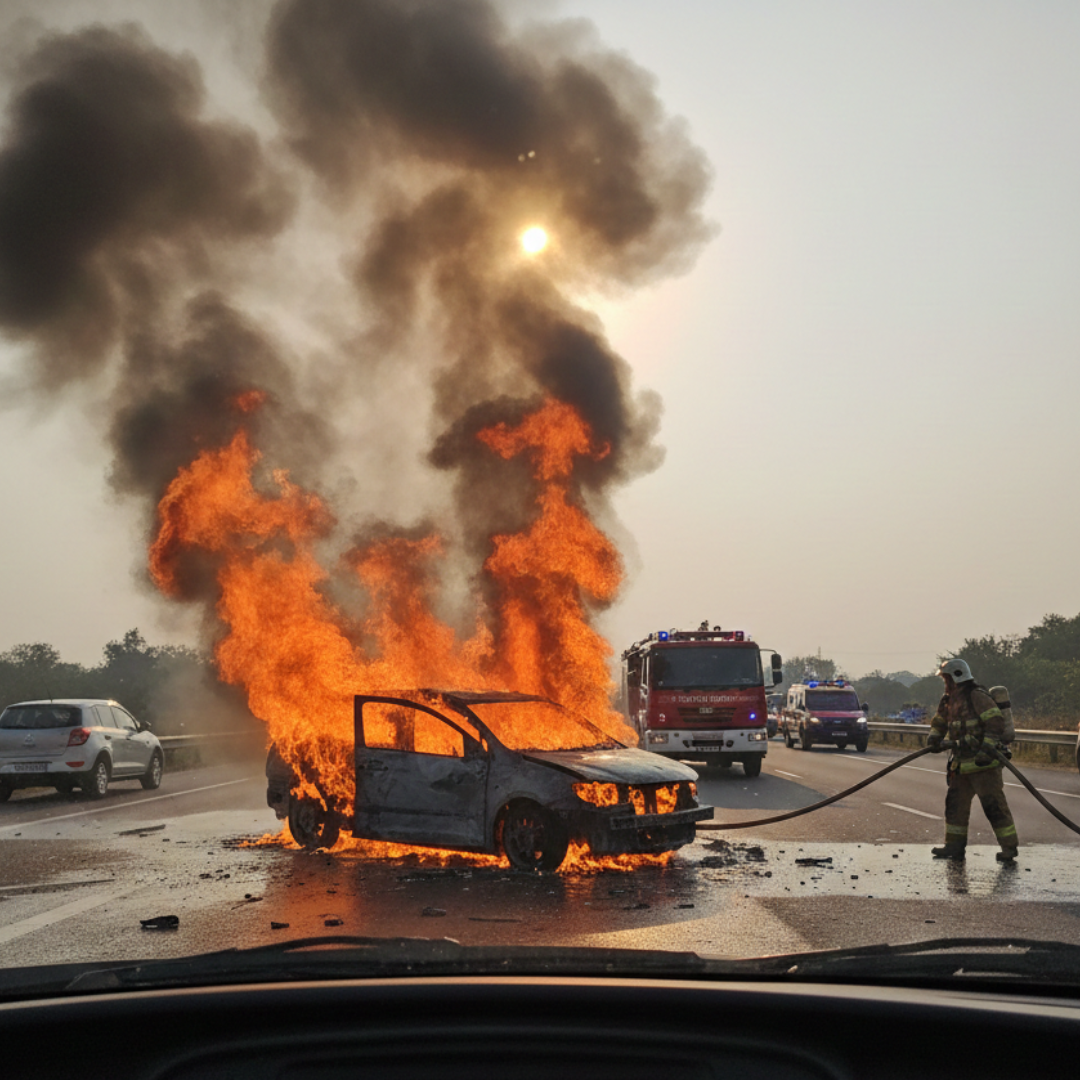
A car fire can erupt without warning—due to engine overheating, fuel leaks, electrical faults, or even an accident. In such moments, car fire emergency response becomes the difference between a close call and a total disaster. Most drivers panic because they don’t know the correct car fire emergency response, even though the car fire emergency response window is extremely short. Understanding the right actions before flames spread can save lives, prevent explosions, and reduce vehicle damage.
Why the First Minute Matters Most
The first 60 seconds of a car fire are critical. Fires double in size every few seconds, and modern vehicles contain plastics, fuels, and electrical components that accelerate flames rapidly. Acting decisively—not impulsively—can stop a small fire from becoming fatal.
Step-by-Step Actions Every Driver Must Take
1. Pull Over and Turn Off the Engine
The moment you see smoke or smell burning, stop safely and shut off the engine. This cuts fuel flow and reduces ignition sources—one of the most overlooked car fire safety steps.
2. Evacuate Passengers Immediately
Ensure everyone exits the vehicle and moves at least 100 feet away, staying upwind. This is a key rule in what to do if a car catches fire, especially when fuel tanks or batteries are involved.
3. Do NOT Open the Bonnet Fully
Opening the bonnet completely feeds oxygen to the fire. Instead, open it slightly from the side if you must use an extinguisher.
4. Use a Fire Extinguisher Correctly
If the fire is small and manageable, this is where knowing how to use a fire extinguisher on a car fire matters. Aim at the base of the flames, keep distance, and spray in short bursts. Never attempt this if the fire has already spread extensively.
5. Call Emergency Services
Even if the fire seems controlled, alert authorities. Hidden embers can reignite quickly. These are practical vehicle fire emergency tips every driver should memorise.
Why a Firekiller Fire Extinguisher Is a Must-Have
A Firekiller fire extinguisher is compact, easy to operate, and designed for rapid response in vehicle fires. Keeping one in your car ensures you’re prepared during a car fire emergency response situation—especially before flames become uncontrollable. It’s not an accessory; it’s a safety essential
Common Causes of Car Fires You Shouldn’t Ignore
-Fuel or oil leaks
-Faulty wiring or battery issues
-Overheated engines
-Poor vehicle maintenance
Regular servicing paired with the right car fire emergency response knowledge significantly reduces risk.
Final Thoughts: Prepared Drivers Survive
Car fires don’t announce themselves—but prepared drivers respond faster. The right actions, taken calmly and quickly, can turn chaos into control. Equip your car with a Firekiller fire extinguisher, stay alert to warning signs, and remember: the first minute is everything. When fire strikes, readiness isn’t optional—it’s lifesaving.


