
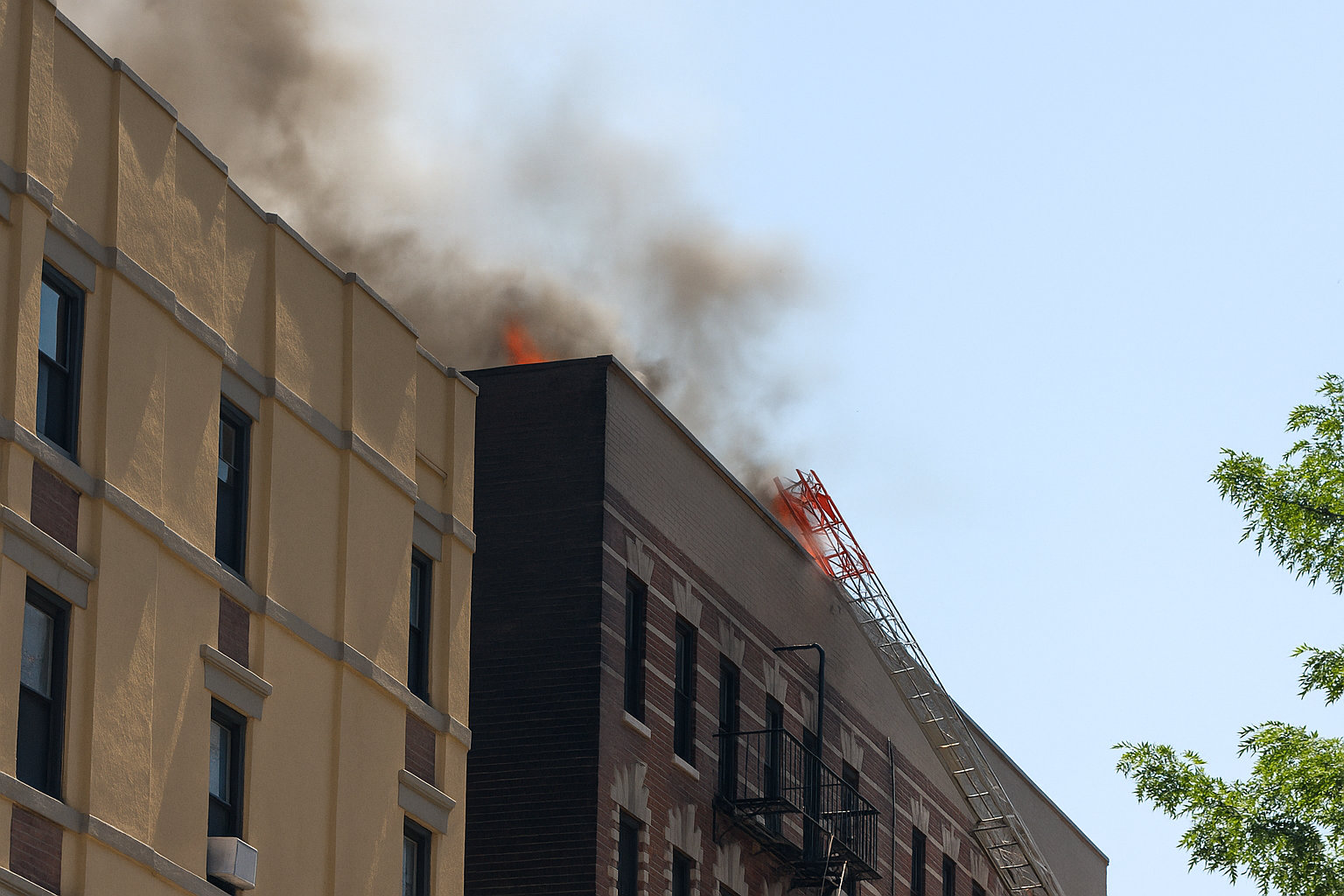
On Friday, August 15, 2025, at around 10:04 a.m. ET, a massive rooftop fire broke out on a residential building in Manhattan’s Upper East Side. Thick black smoke billowed into the sky, visible across much of New York City. The FDNY deployed over 100 firefighters and 25+ units, who battled flames for hours to contain the blaze. Fortunately, residents were safely evacuated, and no major injuries were reported as investigations into the cause continue.
Response & Resources
-
Alarm level: 3-alarm (approx. 40 units).
-
Manpower: ~140–170 FDNY/EMS on scene.
-
Tactics: Coordinated roof ventilation and interior ceiling pulls to access cockloft; exposure protection for penthouses; utility control.
-
Arrival time: ~4 minutes from first call.
Injuries & Displacement
-
Injuries: 3 firefighters (minor) + building superintendent (minor).
-
Evacuations: Top-floor lines/penthouses evacuated; Red Cross/OEM supported displaced residents.
-
No fatalities reported.
Cause (Preliminary) & Fire Behavior
-
Preliminary cause: Gas accumulation in the basement preceding the explosion and fire spread (final ruling pending fire investigators).
- Why it spread fast: The cockloft is a concealed void; once ignited, fire/smoke can travel laterally unless crews quickly open the roof and pull ceilings to expose and extinguish hot spots.
Location & Building Context
-
Address: 305 E 95th St., between First & Second Avenues; seven-story, prewar residential building with rooftop/penthouse build-outs.
-
Neighborhood impacts: Dense residential corridor; street closures, traffic delays, and air-quality advisories during the incident.
Public Guidance & Comms
-
OEM advisory: Avoid the area; close windows if affected by smoke; follow official channels.
-
Media: Extensive live coverage and social video captured thick smoke and rooftop fire conditions.
Key Takeaways & Recommendations
-
Gas safety: Report odors immediately; ensure licensed inspections of gas piping/appliances; consider residential gas alarms.
- Cockloft risk: Prewar buildings with cocklofts require vigilant fire-stopping; renovations (e.g., penthouses/rooftop decks) must maintain code-compliant separations.
- Preparedness: Residents should know stair-only exit routes, keep a small go-bag, and digitize essential documents for rapid evacuation/insurance claims. (General best practice.)
- Post-incident: Management should coordinate utilities shutoffs, gas leak testing, structural checks, and transparent communication of repair timelines.
Conclusion
The Upper East Side rooftop fire shows how a localized gas event can rapidly escalate in dense, older housing stock—especially where cockloft voids and penthouse build-outs exist. Despite difficult roof conditions and heavy smoke, FDNY’s four-minute arrival, disciplined ventilation, and aggressive interior work contained the fire to the cockloft and three penthouses, preventing a far larger disaster. With only minor injuries and no fatalities, the outcome underscores the value of robust first-responder readiness—but it also highlights persistent urban risks tied to gas systems and concealed building voids. A thorough investigation, transparent findings, and code-compliant repairs at 305 E 95th St. will be essential to restoring safety for residents and informing citywide best practices for similar buildings.


