
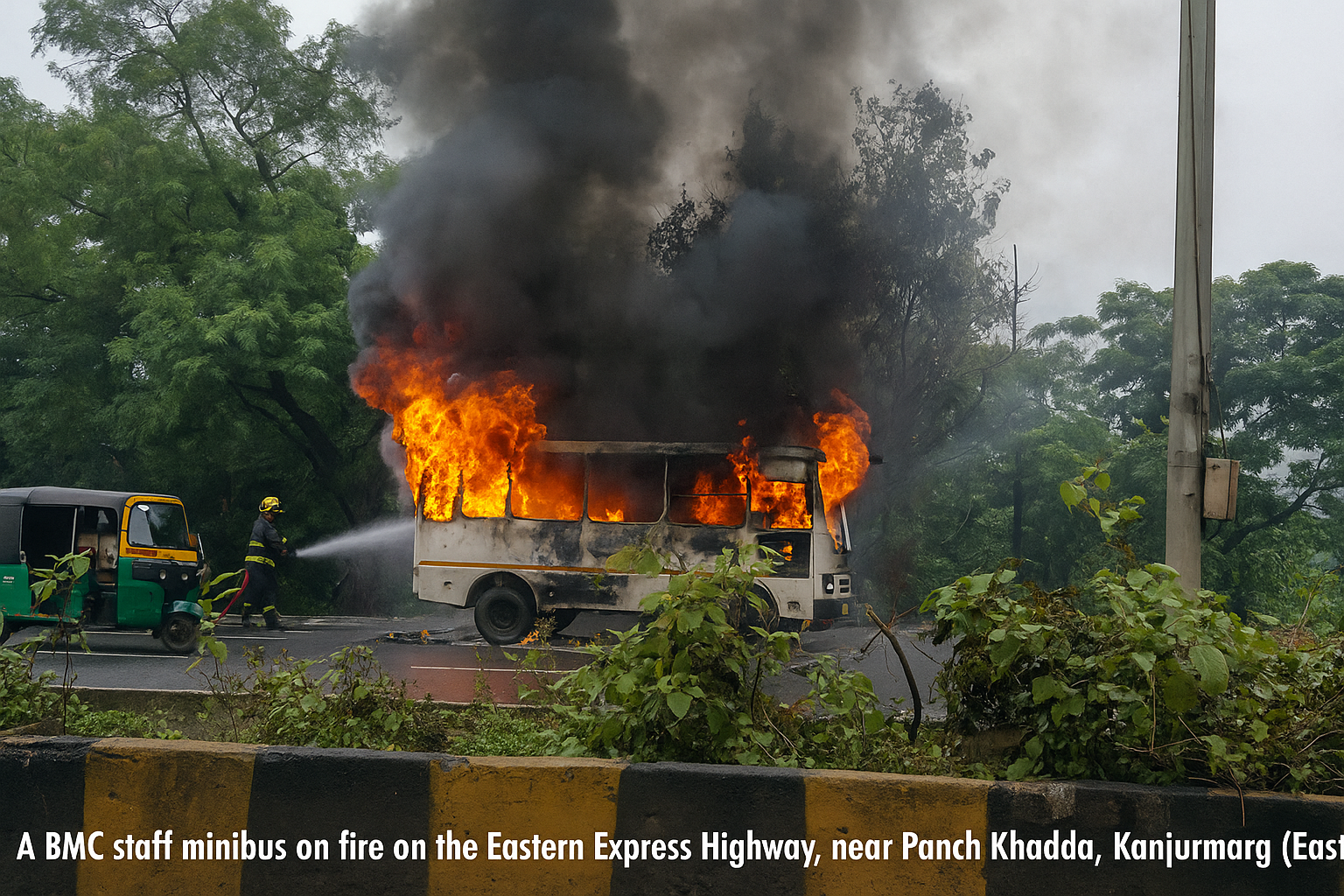
On a quiet Friday morning, what began as a routine commute for Brihanmumbai Municipal Corporation (BMC) staff took a sudden and alarming turn. At approximately 7:15 a.m., a BMC staff minibus traveling along the Eastern Express Highway (EEH) near Panch Khadda, Kanjurmarg (East) burst into flames. The vehicle, which was ferrying staff members from Bhandup Pumping Station to Bhandup Station, was carrying four occupants — the driver and three staff members.
Eyewitnesses describe seeing smoke emanating from the rear of the bus moments before flames engulfed it entirely. Acting promptly, the driver halted the bus on the side of the highway, ensuring all occupants evacuated safely.
Within minutes, the fire had consumed the majority of the bus, producing thick black smoke visible to motorists and residents nearby. The incident caused temporary traffic slowdowns on one of Mumbai’s busiest arterial roads, with drivers diverting lanes to avoid the scene.
Emergency Response
Reports confirm that the Mumbai Fire Brigade was alerted immediately and reached the location in record time, supported by the Mumbai Police for traffic management. By 7:49 a.m., less than 35 minutes after the first alarm, the flames were fully extinguished.
Firefighters employed multiple high-pressure water jets to bring the situation under control, preventing any risk of the fire spreading to nearby vehicles or roadside structures. The bus, however, was gutted, leaving behind only a charred metal frame.
Authorities towed the remains of the vehicle away later in the morning to facilitate a detailed inspection and to restore normal traffic flow on the EEH.
Cause Under Investigation
While no official cause has yet been declared, initial reports and expert commentary point towards possible electrical failure or mechanical malfunction in the engine bay or wiring system. These are among the most common causes of sudden bus fires, particularly in older or heavily used fleet vehicles.
Investigators from the BMC transport department, alongside fire safety engineers, are expected to:
-
Inspect the wiring harness and fuel system for faults.
-
Examine maintenance records to determine if recent servicing addressed known issues.
-
Interview the driver and staff for a firsthand account of events leading up to the blaze.
-
Review any CCTV footage from nearby road cameras or mobile phone videos shared by passersby.
A conclusive report is anticipated in the coming days, which could lead to a directive for broader checks across BMC’s fleet.
Public Safety Implications
Vehicle fires on high-speed roadways present significant hazards, not only to occupants but also to surrounding motorists. The quick evacuation in this case was crucial — had there been delays, the smoke inhalation or flash fire spread could have been dangerous.
This incident underscores the importance of:
-
Regular mechanical and electrical maintenance for civic vehicles.
-
Equipping buses with functional fire extinguishers and ensuring drivers are trained in their use.
-
Establishing rapid communication channels between drivers, depot supervisors, and emergency services.
For BMC, the incident may act as a wake-up call to intensify preventive safety measures across its transportation services.
Eyewitness & Public Reaction
Several commuters captured video clips of the blaze, which quickly circulated on social media. These clips, showing flames shooting from the bus and smoke billowing skyward, drew both concern and commendation — concern over the potential danger, and commendation for the driver’s presence of mind.
Local residents expressed relief that no one was injured, but some voiced frustration at the traffic congestion that followed. Road safety advocates reiterated calls for mandatory periodic inspections for all public service vehicles.
Past Incidents for Context
Mumbai has seen similar cases in previous years:
-
In 2022, a private tour bus caught fire on the Mumbai–Pune Expressway due to engine overheating.
-
In 2019, an electric BEST bus experienced a minor blaze, traced back to a wiring short-circuit.
In each case, swift evacuation saved lives, but the property damage and disruption highlighted systemic maintenance challenges.
Conclusion
The BMC staff bus fire near Panch Khadda, Kanjurmarg serves as a vivid reminder of how quickly a routine commute can escalate into a life-threatening situation. In this instance, a combination of the driver’s quick action, the passengers’ calm evacuation, and the fire brigade’s rapid intervention ensured that no lives were lost.
However, this fortunate outcome should not overshadow the fact that such incidents are preventable. Whether due to electrical faults, fuel leaks, or mechanical neglect, vehicle fires in public fleets point to the urgent need for:
-
Stricter adherence to preventive maintenance schedules.
-
Fleet-wide electrical system audits.
-
Compulsory fire safety equipment and training for all drivers and conductors.
In a city as densely populated and high-traffic as Mumbai, proactive safety protocols are not just best practice — they are a necessity. The lessons from this incident, if implemented, can prevent future tragedies, safeguard public trust, and ensure the smooth, safe functioning of civic transportation services.


