
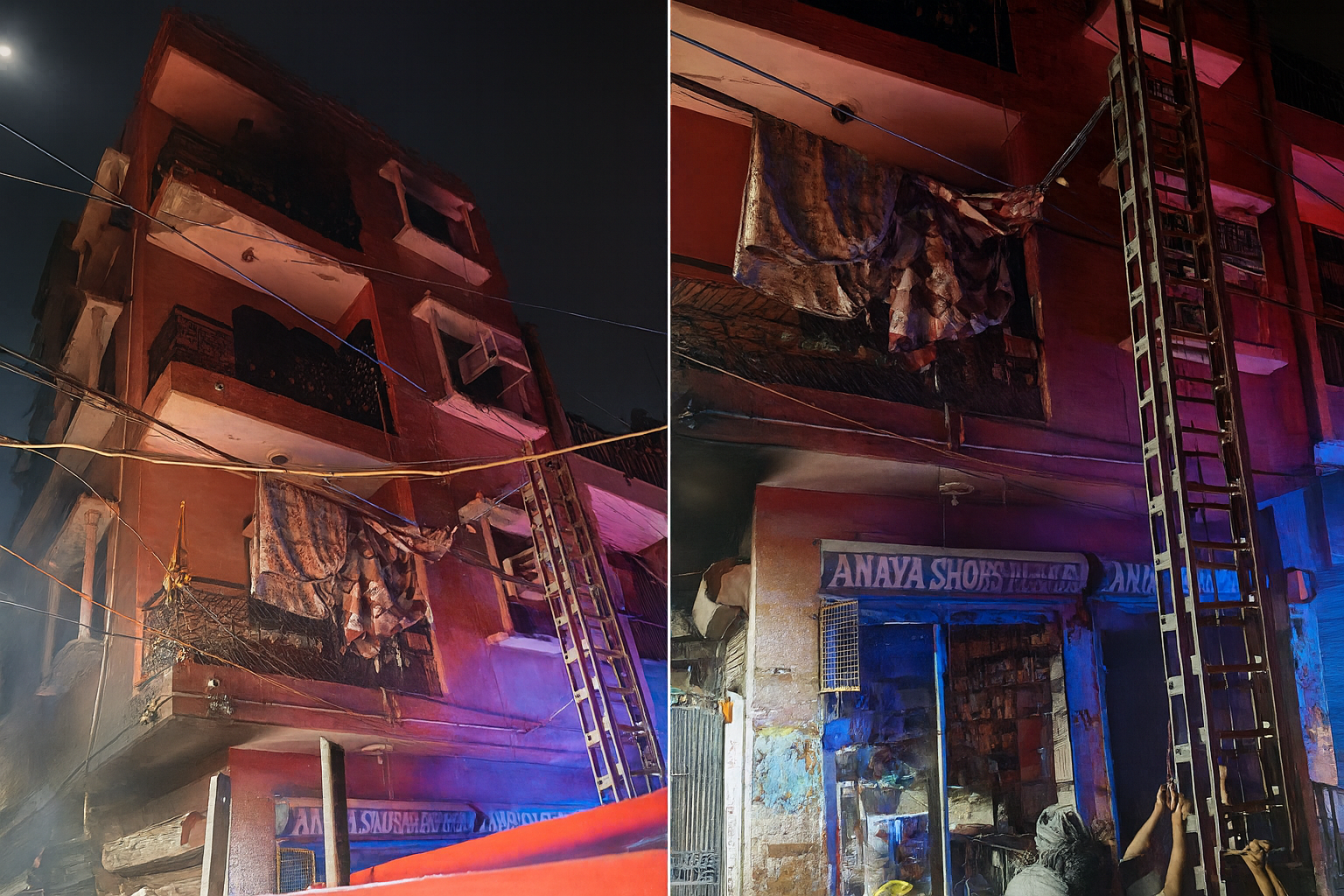
A devastating fire erupted at a 4-storey residential building in New Delhi’s Tigri Extension, claiming at least four lives and injuring several others. The blaze quickly engulfed the structure, leaving residents trapped with little chance to escape. Firefighting teams rushed to the spot and managed to control the flames, but the incident highlighted serious concerns about fire safety in densely populated urban areas.
Building Safety Under Question
According to local authorities, the building had limited fire safety measures, making evacuation difficult. Narrow staircases, no emergency exits, and lack of fire alarms added to the chaos. Experts believe overcrowded structures, improper electrical setups, and absence of safety planning play a major role in such tragedies.
Electrical Short Circuits – A Silent Threat
Primary reports indicate that the fire may have been triggered by an electrical short circuit. Poor maintenance of wiring, overloaded power points, and faulty equipment are common causes of urban fires. Residents often ignore routine electrical inspections, putting their lives at risk.
Quick Firefighting Efforts Save More Lives
Fire brigades responded swiftly and conducted rescue operations using ladders and safety gear. Their timely intervention prevented further loss of life. However, experts stress that even the fastest rescue operations can’t fully compensate for the lack of prevention and preparedness.
The Bigger Picture: Fire Safety Ignored
This tragedy is a grim reminder that many residential buildings lack basic fire safety protocols. No evacuation drills, missing fire extinguishers, and blocked exits make disaster responses extremely difficult. Fire safety should not just be a requirement—it must become a habit.
Time to Act: Prevent, Protect, Prepare
To prevent such disasters, authorities and residents must work together to:
-
Install fire alarms and extinguishers
-
Conduct regular safety audits
-
Keep exits and stairways clear
-
Educate residents on fire escape procedures
Simple steps like these can help save lives when seconds matter.


