
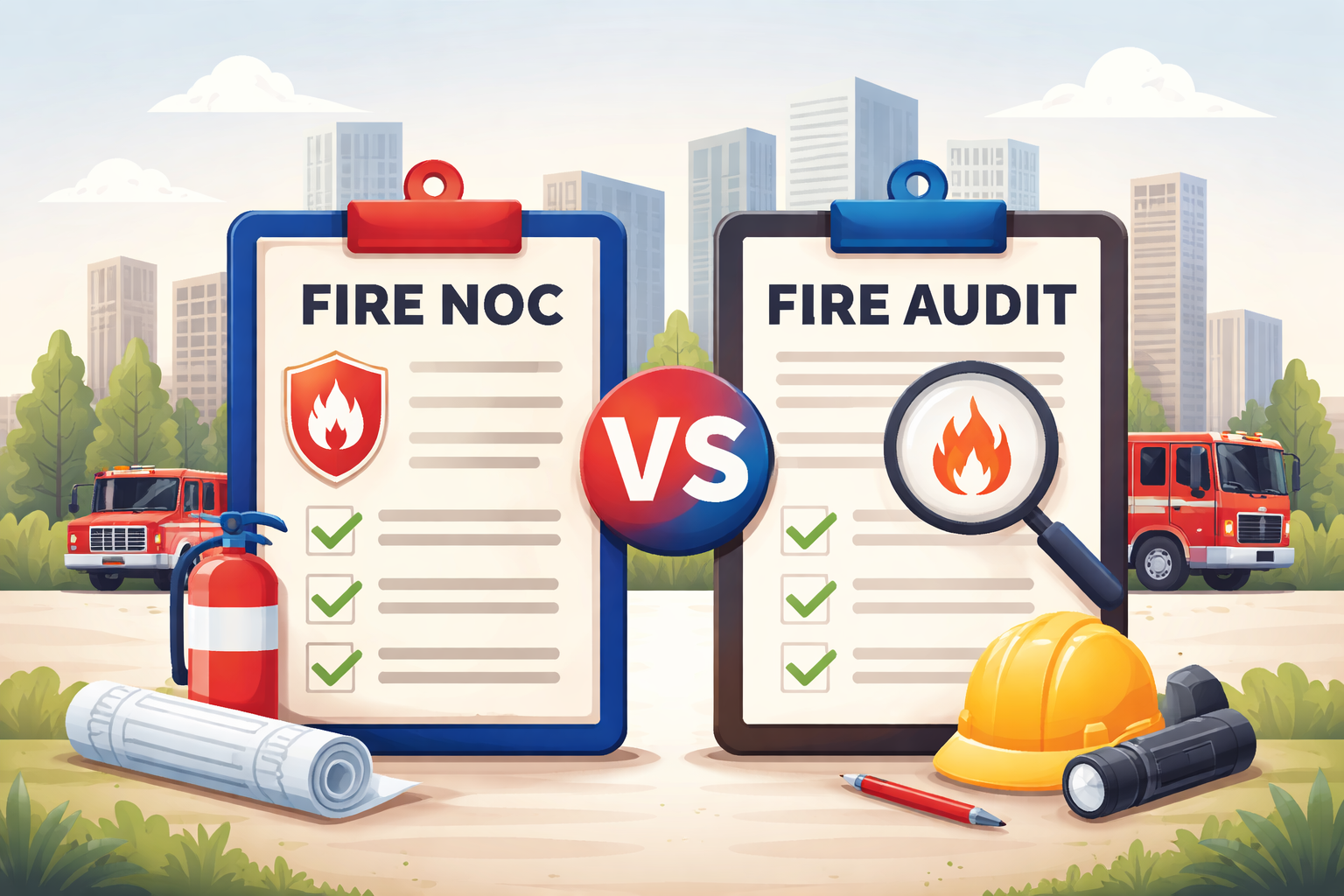
Fire safety is one of the most critical responsibilities for any building owner. Whether it is a residential complex, commercial building, warehouse, or industrial facility, complying with fire safety norms is essential to protect lives and property. However, many property owners often get confused between Fire NOC vs Fire Audit and assume they are the same thing.
Understanding Fire NOC vs Fire Audit is extremely important because both play different roles in maintaining fire safety and regulatory compliance. While a Fire NOC is an approval issued by the fire department, a fire audit evaluates whether a building’s fire safety systems are functioning properly.
In simple terms, Fire NOC vs Fire Audit highlights the difference between legal permission and safety assessment. Building owners who clearly understand this concept can avoid legal penalties, improve safety standards, and ensure smooth operation of their premises.
What is a Fire NOC?
A Fire NOC (No Objection Certificate) is an official approval issued by the local fire department stating that a building meets the required fire safety norms. It is usually mandatory before construction approval, occupancy, or operation of certain buildings.
The fire NOC requirements for buildings generally include installing proper fire safety equipment such as fire extinguishers, hydrant systems, fire alarms, sprinkler systems, and emergency exits. Authorities verify these installations before granting the certificate.
Obtaining this approval also highlights the importance of fire NOC compliance, as it ensures that the building follows government safety standards designed to minimize fire risks. Without a valid Fire NOC, a building may face penalties, closure notices, or even legal action.
What is a Fire Safety Audit?
A fire safety audit is a systematic inspection carried out by fire safety experts to evaluate whether the fire protection systems in a building are working properly and meeting safety standards.
A fire safety audit for commercial buildings is especially important because offices, malls, hotels, and factories usually have a large number of occupants and higher fire risks. During the audit, experts examine fire extinguishers, alarms, evacuation routes, emergency lighting, and staff preparedness.
Unlike a Fire NOC, which is usually issued once during approval or occupancy stages, fire audits should be conducted regularly to ensure that safety systems remain functional and effective.
Difference Between Fire NOC and Fire Audit
Many property owners misunderstand the difference between fire NOC and fire audit, but the two serve different purposes.
A Fire NOC is a mandatory approval issued by the fire department confirming that the building design and safety installations comply with fire safety norms. It is mainly required during construction approval or before occupancy.
A fire audit, on the other hand, is a detailed safety evaluation conducted periodically to check whether the installed systems are functioning properly and whether the building remains compliant with safety standards.
Simply put, a Fire NOC confirms that the building meets fire safety requirements at the approval stage, while a fire audit ensures ongoing safety and preparedness.
Why Building Owners Must Understand This
Understanding Fire NOC vs Fire Audit helps building owners avoid major safety and legal issues. Many accidents occur because buildings obtain approvals initially but fail to maintain their safety systems over time.
Regular audits help identify faults such as expired fire extinguishers, blocked emergency exits, malfunctioning alarms, or non-functional hydrant systems. Addressing these issues quickly can prevent serious fire incidents.
Additionally, following proper fire safety regulations for building owners ensures that the property remains compliant with local fire department guidelines and national safety standards.
Conclusion
Fire safety is not just about installing equipment—it is about maintaining a complete safety system that protects lives and property. Understanding Fire NOC vs Fire Audit helps building owners recognize the difference between regulatory approval and continuous safety evaluation.
While a Fire NOC ensures that a building initially complies with safety norms, regular fire audits confirm that these systems remain effective over time. Building owners who take both seriously create safer environments, reduce fire risks, and stay compliant with safety regulations.
In today’s environment, where fire incidents are becoming more common, proactive safety measures and regular inspections are the best way to ensure that buildings remain secure and prepared for emergencies.


