
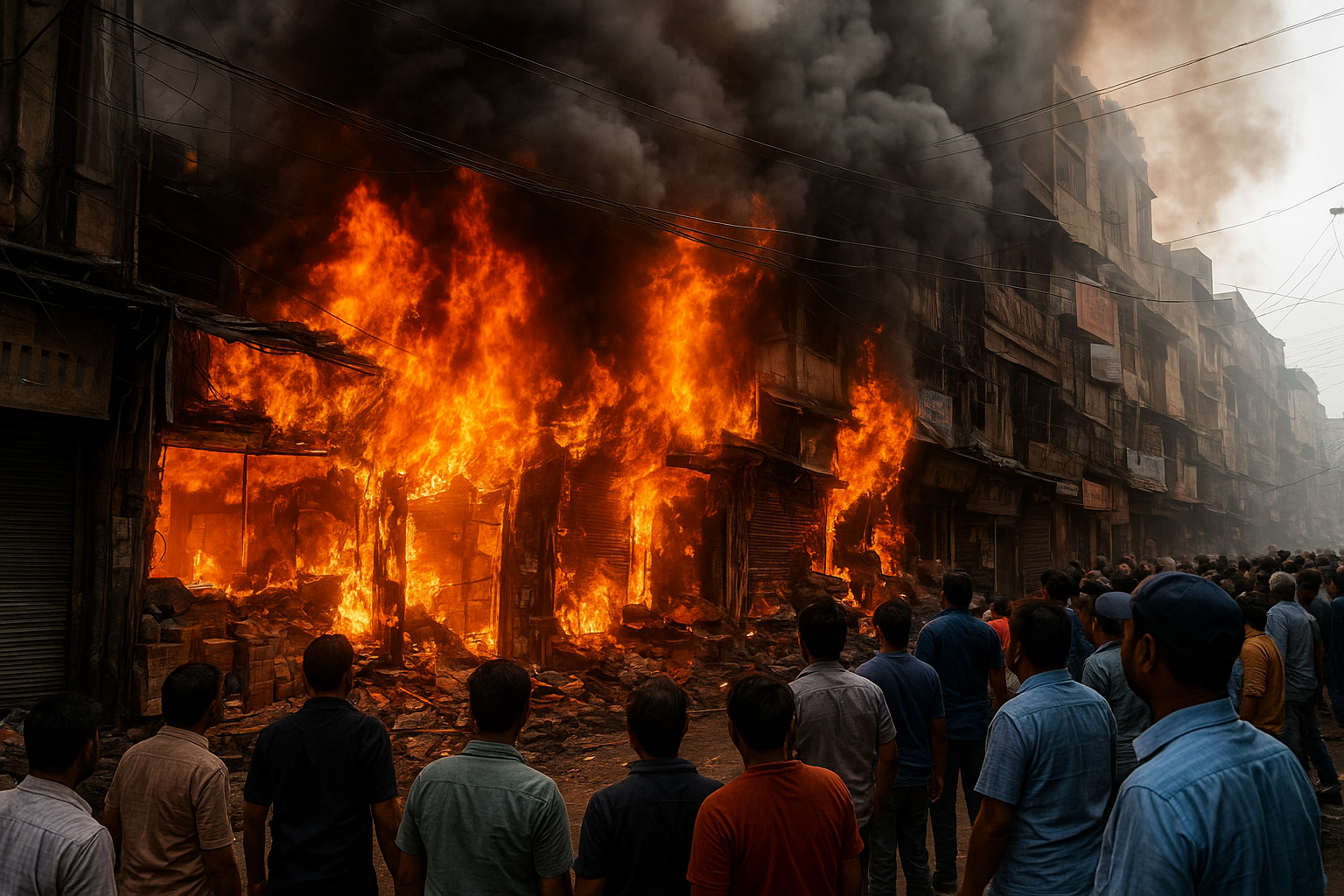
Delhi’s bustling Karol Bagh’s Gaffar Market, one of the city’s most crowded and popular shopping hubs, was recently shaken by a devastating blaze. Known for its dense lanes filled with electronics, garments, and household items, the market is always buzzing with activity. But in the early hours, the regular hum of business was replaced by chaos as a massive fire broke out, engulfing several shops and leaving traders in deep shock.
The incident caused panic among shopkeepers and residents, as thick black smoke rose into the sky and spread across the area. The fire quickly consumed multiple establishments, most of which were stacked with electronics, mobile accessories, and plastic products—materials that can intensify flames rapidly. Traders and onlookers watched helplessly as years of investment and livelihood went up in smoke within minutes.
A Market of Dreams Turns Into Ashes
Gaffar Market has long been known as a hotspot for budget-friendly electronics and mobile accessories, attracting thousands of shoppers every day. Many traders here have built their businesses over generations, making the fire all the more heartbreaking. For small shop owners, this wasn’t just about property damage—it was about watching their dreams and hard work crumble in the flames.
Some traders shared their grief, explaining how the fire destroyed not only their stock but also their financial stability. The goods stored inside were highly flammable, worsening the intensity of the blaze and making recovery even harder for affected businesses. With festive season sales around the corner, the timing of the incident has left many retailers deeply worried about the future.
Community Shock and Disruption
The Gaffar Market fire has disrupted daily life in the area. The narrow lanes of Karol Bagh are always congested with vehicles, shoppers, and vendors, making the scene of the incident even more chaotic. Shopkeepers rushed to salvage what they could, but the speed of the fire left little opportunity to recover stock. Residents nearby were also forced to evacuate temporarily due to the thick smoke and fear of further escalation.
The incident has highlighted the vulnerability of such densely packed markets in Delhi. With shops built close to each other, storing large quantities of inflammable goods, even a minor spark can quickly turn into a disaster. For the local business community, this event is a reminder of how fragile livelihoods can be in the face of unexpected tragedy.
Economic Fallout for Traders
Beyond the immediate damage, the long-term economic losses are staggering. Electronics and plastic items worth lakhs of rupees have been reduced to ashes. Many traders depend entirely on daily sales to keep their businesses running, and now face uncertainty about when—or if—they can reopen. Insurance coverage, where available, may provide some relief, but smaller shopkeepers often operate without such safeguards, leaving them financially stranded.
The incident also raises concerns about the preparedness of marketplaces to deal with such emergencies. While large commercial hubs often have fire safety mechanisms in place, many smaller shops overlook or delay safety measures, putting their businesses at greater risk. The fire at Gaffar Market serves as a painful reminder of the urgent need for safety awareness in crowded urban markets.
A Wake-Up Call for Marketplaces
As traders begin to assess the damage, the focus has shifted to what could be done to prevent similar incidents in the future. From stricter safety checks to awareness drives about storing inflammable goods, the need for preventive measures cannot be ignored. Market associations and shop owners will need to work together to ensure that such disasters do not repeat themselves.
Conclusion: Lessons in Loss and Resilience
The fire at Karol Bagh’s Gaffar Market has left behind charred shops, financial losses, and emotional scars, but it has also sparked conversations about resilience and responsibility. While the incident is a tragic blow to hundreds of traders, it stands as a wake-up call for marketplaces across Delhi to prioritize safety and preparedness. Out of the ashes of loss, there lies an opportunity—to rebuild stronger, safer, and with a renewed determination to protect livelihoods from future tragedies.


