
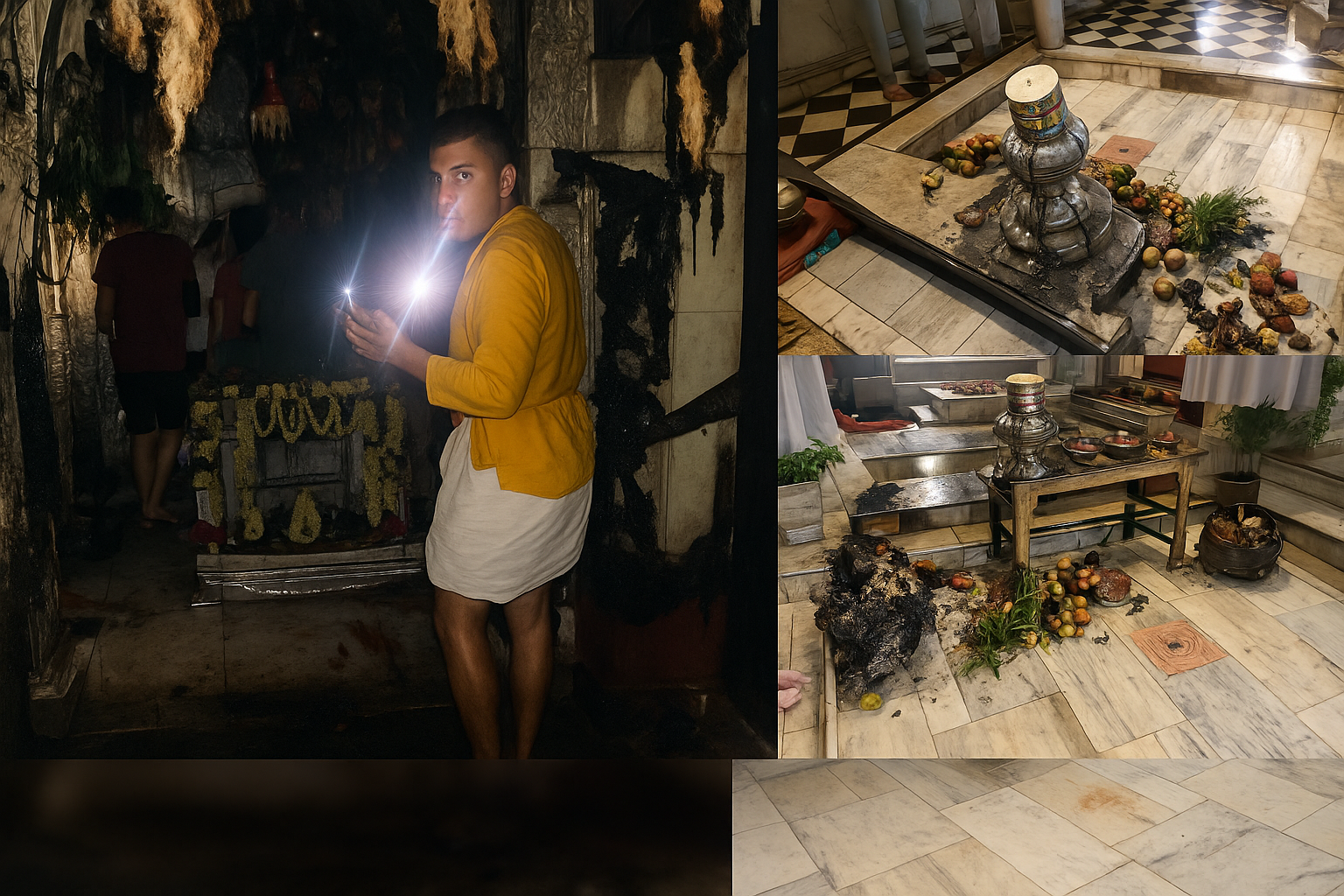
On Saturday evening, August 9, 2025, during the Shringar Puja aarti at approximately 9:00 PM, a fire suddenly broke out in Varanasi’s Atma Vishweshwar Temple when the aarti flame came into contact with cotton used for decorations inside the sanctum. The blaze spread within seconds, causing panic among the gathered devotees. As a result, nine people—including the chief priest, several children (such as 10-year-old Preet and 6-year-old Krishna), and other worshippers—sustained injuries ranging from minor to moderate burns. They were promptly rescued by fellow devotees and local residents, initially treated at the SPG Divisional Hospital, and later transferred to a private facility in the Mahmoorganj area. Authorities note that all victims are currently in stable condition.
Victims and medical response
-
Number injured: Nine people
-
Injuries & treatment: Reported injuries include burns and minor to moderate injuries; initial treatment at SPG Divisional Hospital followed by transfer to a private hospital in Mahmoorganj. Media reports indicate most are stable and out of danger; one early report referenced a seriously injured person.
Cause (preliminary) and mechanics of the fire
-
Likely ignition source: The flame used in the aarti (camphor/oil lamp) contacting cotton/wool decorations inside the sanctum. Multiple reports emphasize cotton used for decoration — a highly flammable material — which accelerated spread.
-
How it spread so fast: Confined sanctum spaces, crowding of devotees, and presence of combustible decorations (cotton/ice/wool used for “shringa r” or ornamentation) create a flash-fire risk: once the cotton ignited, the blaze can leap and produce thick smoke in seconds, prompting chaotic evacuation.
Eyewitness and official accounts
-
Eyewitnesses: Devotees present at the aarti reportedly doused or pulled victims from the flames and helped evacuate the sanctum. Several local residents aided until emergency services arrived.
-
Official response: Chowk police and a fire brigade unit were dispatched; senior police officials visited the site to take stock. The fire was reportedly extinguished quickly with the help of residents and emergency teams.
Immediate operational lessons (what went wrong)
-
Decorations & combustible materials: Use of untreated cotton/wool as decorative material inside confined worship spaces is a clear ignition hazard.
-
Crowd density in small sanctums: Overcrowding in the sanctum can hamper evacuation and increase casualties (smoke inhalation and trampling risk).
-
Lack of immediate firefighting equipment at point of worship: Many small temples rely on local response; absence of small extinguishers, dedicated water buckets or emergency exits increases reliance on bystanders and may delay professional responders.
-
Open flames near flammable decor: The aarti ritual involves open flames; combining that with flammable decor is inherently risky unless strict safeguards are in place.
Broader safety and regulatory context
-
Temple safety oversight: In many Indian cities, large temple complexes (and some smaller ones) have rules and periodic inspections by local municipal or fire departments; however, compliance across small, neighborhood temples is inconsistent. City authorities often require fire extinguishers in large venues and safe material standards for decorations, but enforcement is variable. (See local precedent of short-circuit/temple fires in Varanasi and elsewhere that prompted ad-hoc safety checks.)
Recommendations — immediate & longer term
Immediate (can be implemented within days):
-
Remove flammable decorative materials (cotton, dry floral sprays) from sanctums during live aartis; replace with flame-retardant alternatives.
-
Establish a volunteer safety marshal rota for ceremonies — trained to cut off flames, keep exits clear, carry a fire blanket/extinguisher.
-
Keep at least two small, accessible CO₂ or powder extinguishers near the main sanctum and train two–three temple staff/volunteers in their use.
-
Define clear evacuation routes and ensure they remain unobstructed during rituals.
Short-to-medium (weeks–months):
-
Mandatory audits: Municipal body or fire department to audit high-footfall temples and instruct corrective action where needed.
-
Fire-retardant certification: Use certified, flame-retardant decorative materials for festivals and special pujas.
-
Public awareness: Short pre-puja announcements reminding devotees to avoid carrying loose scarves or material near flames, and have volunteers guide crowd movement.
Long term (policy & design):
-
Enforce basic fire safety compliance (extinguishers, exit signage) even for small neighborhood temples through simplified, low-cost certification.
-
Encourage architectural redesigns where possible to enlarge ventilation and ensure second exits for sanctums that host large gatherings.
Conclusion
The Atma Vishweshwar temple blaze is a reminder of a recurring safety gap: ritual practices that involve open flames and festive decorations are culturally significant but can become dangerous when combined with flammable materials and crowded, confined spaces. In this case, quick action by devotees and a fast emergency response limited casualties — nine injured rather than a far worse outcome. Nonetheless, the incident underscores an urgent need for consistent basic fire-safety measures at places of worship: remove flammable decor, place extinguishers within reach, train volunteer safety marshals, and run municipal safety audits. Implementing these low-cost measures would markedly reduce the likelihood of similar incidents during future ceremonies.


