
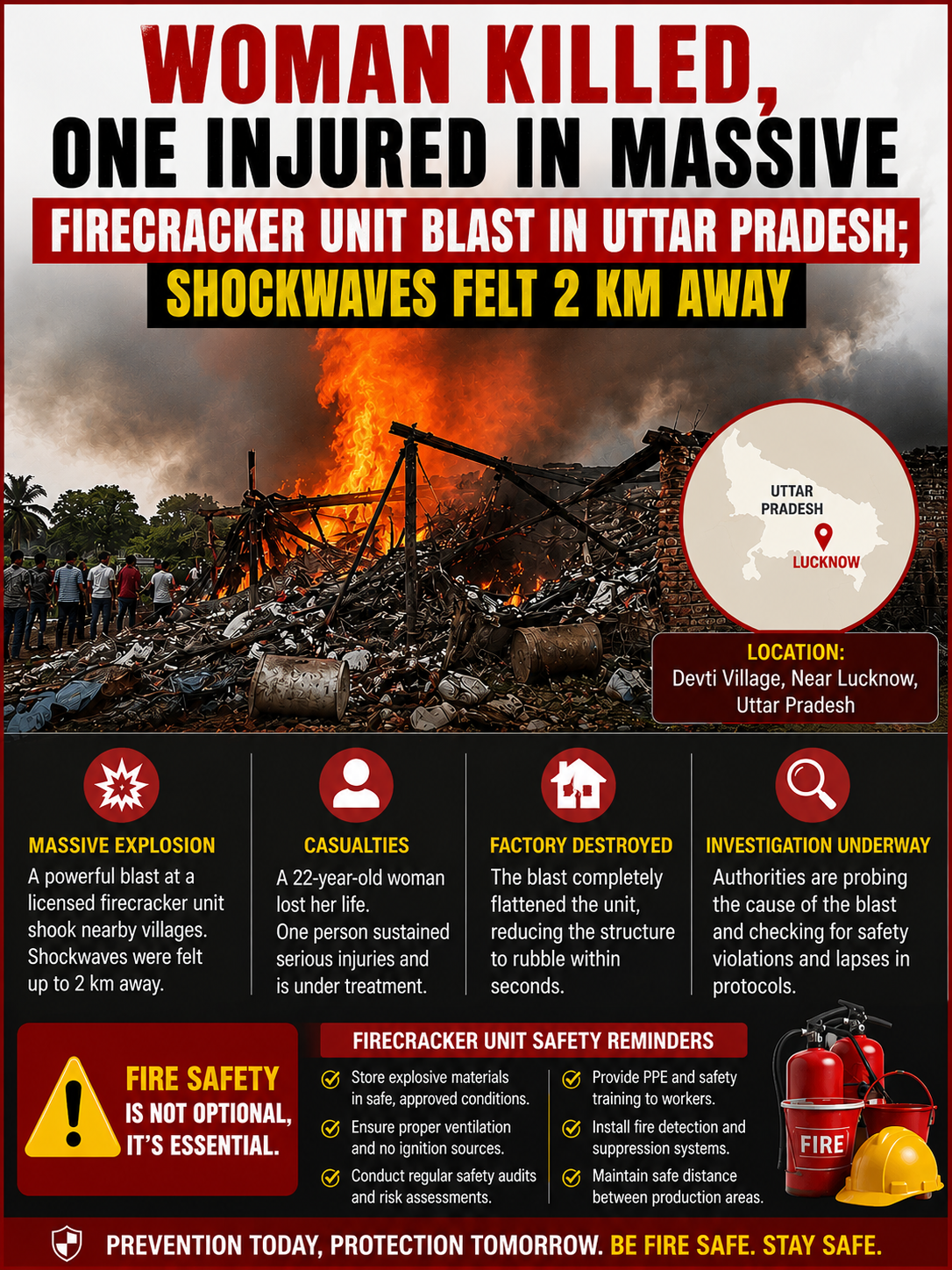
A devastating explosion at a licensed firecracker manufacturing unit in Devti village near Lucknow, Uttar Pradesh, claimed the life of a 22-year-old woman and left another person seriously injured. 15 June 2026 (Monday) Around 12:00 PM–12:30 PM IST. The blast was so powerful that residents up to 2 kilometres away felt the shockwaves, with many initially believing that a bomb had exploded. The force completely flattened the factory building, scattering debris, firecracker materials, and structural fragments across the surrounding area.
Panic Grips Nearby Villages
The force of the explosion created panic across the surrounding area. Many residents initially believed a bomb had exploded due to the intensity of the blast. Debris, damaged materials, and firecracker remnants were scattered across the site as villagers rushed outdoors fearing a larger disaster. Emergency responders, police personnel, and local authorities quickly reached the location to secure the area and prevent secondary incidents.
Young Woman Loses Life, Another Worker Injured
Authorities confirmed that a 22-year-old woman lost her life in the explosion, while another worker sustained injuries and was rushed for medical treatment. The exact extent of the injuries is still being assessed. Rescue teams searched the debris to ensure no additional workers were trapped beneath the collapsed structure.
Investigation Underway
Officials have launched an investigation to determine the exact cause of the explosion. Since the unit reportedly possessed a valid manufacturing license, investigators are expected to examine operational procedures, storage practices, handling of explosive materials, and compliance with safety regulations. Preliminary assessments will focus on whether there were any violations of explosive handling protocols or equipment failures that could have triggered the blast.
A Recurring Safety Challenge
The tragedy highlights a disturbing pattern of accidents involving firecracker manufacturing units across India. Similar incidents in Uttar Pradesh, Andhra Pradesh, Tamil Nadu, Punjab, Maharashtra, and other states have repeatedly resulted in fatalities, injuries, and extensive property damage. Investigations into previous accidents have often pointed to unsafe storage of explosive materials, overcrowded work areas, inadequate safety measures, and lapses in regulatory compliance.
Why Firecracker Units Are High-Risk Facilities
Firecracker manufacturing involves highly combustible and explosive substances. Even a minor spark, friction point, static discharge, or chemical reaction can trigger a chain reaction capable of causing catastrophic damage.
Key risk factors include:
-
Improper storage of explosive compounds
-
Excessive quantities of raw materials
-
Lack of fire-resistant construction
-
Poor ventilation
-
Inadequate employee training
-
Absence of automatic fire suppression systems
When these hazards combine, a single ignition source can result in a blast powerful enough to destroy entire buildings.
Fire Safety Lessons for High-Risk Industries
The Lucknow blast serves as another reminder that safety cannot be treated as a formality.
Every explosive manufacturing facility should have:
✅ Strict material storage controls
✅ Dedicated safety officers
✅ Fire detection and alarm systems
✅ Emergency evacuation plans
✅ Worker safety training programs
✅ Routine fire and explosion risk assessments
✅ Compliance audits by regulatory authorities
Conclusion
The Lucknow firecracker unit explosion is a stark reminder that even licensed facilities can become sites of tragedy when explosive materials are involved. While authorities continue their investigation, the loss of a young life and the injuries sustained by another worker underscore the need for uncompromising safety standards in high-risk industries. For fire safety professionals and industry operators, the incident serves as yet another warning that prevention, compliance, and preparedness remain the strongest defenses against catastrophic accidents.
-by oustfire


