
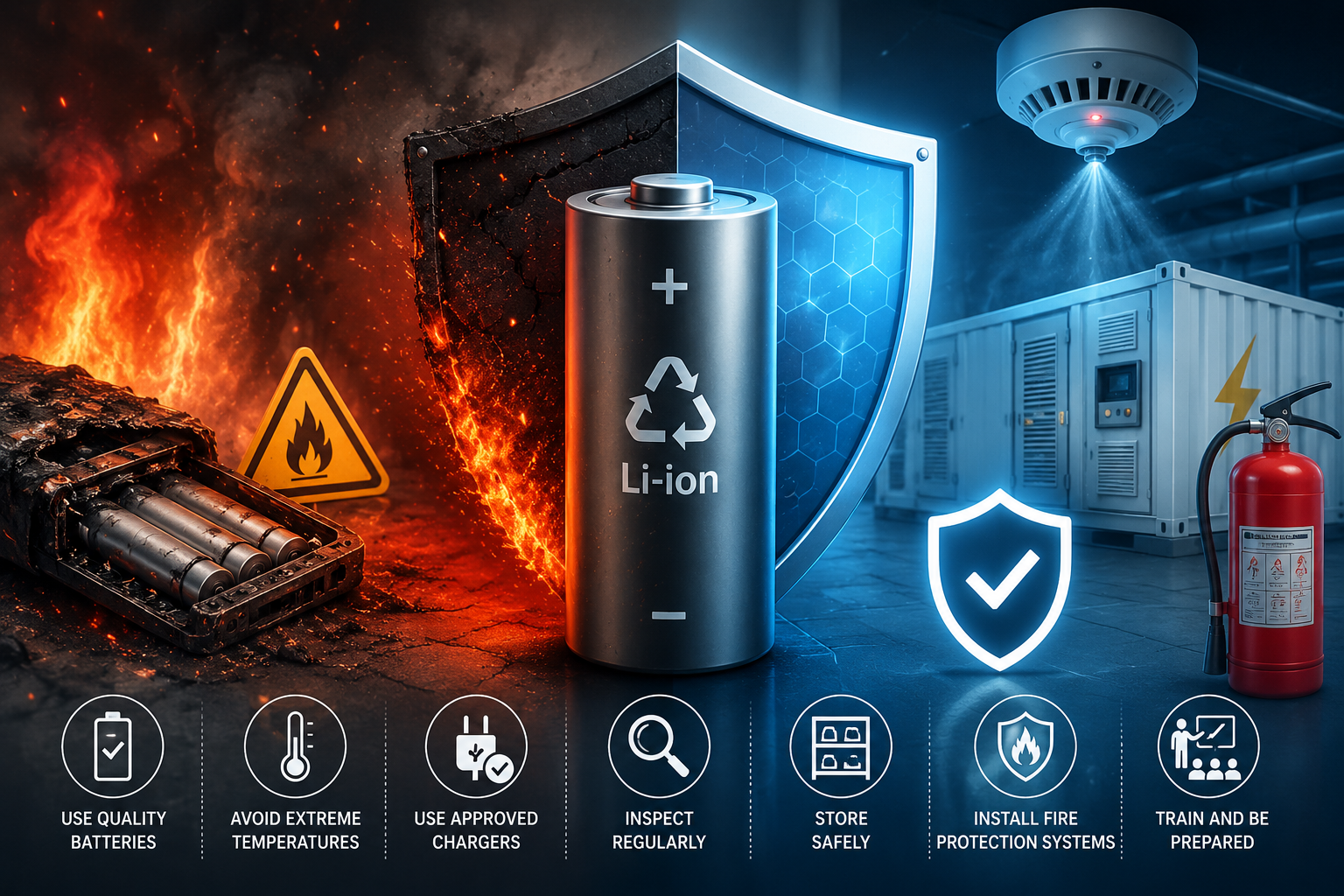
Lithium-ion batteries power our everyday lives. From smartphones and laptops to electric vehicles and energy storage systems, these batteries have become essential. However, as their use continues to grow, so does the risk of battery-related fires. Understanding the causes of these incidents and adopting effective Lithium-Ion Battery Fire Prevention measures is crucial for individuals and businesses alike. Proper Lithium-Ion Battery Fire Prevention can significantly reduce the likelihood of dangerous thermal runaway events. By prioritizing Lithium-Ion Battery Fire Prevention, we can safely benefit from the convenience and efficiency that lithium-ion technology provides.
Why Do Lithium-Ion Battery Fires Occur?
Lithium-ion batteries store a large amount of energy in a compact space. While this makes them highly efficient, it also creates potential hazards when batteries are damaged, improperly charged, exposed to extreme temperatures, or manufactured with defects.
One of the most common causes of battery fires is a phenomenon known as thermal runaway. This occurs when a battery cell overheats, triggering a chain reaction that rapidly increases temperature and can lead to fire or explosion. Understanding these Lithium-Ion Battery Fire Risks is essential for preventing accidents and protecting lives.
Common Sources of Lithium-Ion Battery Fires
As users of battery-powered devices, we often overlook potential warning signs. Some common situations that can lead to fires include:
- Using damaged or swollen batteries.
- Charging devices with incompatible chargers.
- Overcharging batteries for extended periods.
- Exposing batteries to excessive heat or direct sunlight.
- Physical damage caused by drops, impacts, or punctures.
- Improper storage of spare batteries.
Awareness of these risks helps us make safer decisions when handling battery-powered equipment.
Best Practices for Battery Safety
Whether at home, in the workplace, or in industrial facilities, following safe battery practices can significantly reduce fire hazards.
1. Use Approved Chargers
Always use manufacturer-recommended chargers and charging equipment. Cheap or counterfeit chargers may not provide proper voltage regulation, increasing the risk of overheating.
2. Avoid Extreme Temperatures
Lithium-ion batteries perform best within specified temperature ranges. Avoid storing or charging devices in hot vehicles, near heat sources, or in direct sunlight.
3. Inspect Batteries Regularly
Check batteries for signs of swelling, leakage, discoloration, or physical damage. If any abnormalities are noticed, discontinue use immediately and follow proper disposal procedures.
4. Store Batteries Safely
Store batteries in cool, dry locations away from combustible materials. Proper storage is a key component of Lithium Battery Fire Safety.
5. Follow Charging Guidelines
Never leave charging batteries unattended for extended periods, especially overnight. Implementing proper charging procedures supports effective Lithium-Ion Battery Fire Prevention in both residential and commercial settings.
Fire Protection Solutions for Lithium-Ion Batteries
Traditional fire protection methods may not always be sufficient for lithium-ion battery incidents. Specialized Battery Fire Protection Systems are designed to detect overheating conditions early and suppress fires before they escalate.
Modern fire protection solutions may include:
- Early smoke and gas detection systems.
- Thermal monitoring technology.
- Automatic fire suppression systems.
- Water mist and clean agent systems.
- Battery enclosure protection solutions.
These systems are becoming increasingly important as battery-powered technologies continue to expand across industries.
Fire Safety in Battery Energy Storage Systems
Large-scale energy storage facilities present unique fire challenges due to the concentration of battery cells in one location. Effective Battery Energy Storage Fire Safety requires a combination of advanced detection technologies, suppression systems, ventilation strategies, and emergency response planning.
Organizations operating battery storage facilities should conduct regular inspections, risk assessments, and fire drills to ensure preparedness in the event of an emergency.
What to Do If a Lithium-Ion Battery Catches Fire
If a lithium-ion battery begins to smoke, hiss, or emit unusual odors:
- Move away from the battery if it is safe to do so.
- Evacuate the area immediately.
- Contact emergency services.
- Do not attempt to handle a burning battery without proper training and equipment.
- Follow established emergency response procedures.
Understanding proper emergency actions is a critical aspect of Fire Safety for Lithium Batteries.
Building a Safer Future with Lithium-Ion Batteries
As our dependence on lithium-ion technology continues to grow, so does our responsibility to manage its risks effectively. Manufacturers, businesses, facility managers, and consumers all play a role in promoting safe battery use.
Regular maintenance, proper charging practices, employee training, and investment in advanced protection technologies can dramatically reduce fire incidents. Adopting strong Lithium-Ion Battery Fire Prevention strategies today will help ensure safer homes, workplaces, and communities tomorrow.
Conclusion
Lithium-ion batteries are transforming the way we live and work, but their benefits must be balanced with proper safety measures. By understanding the risks, following best practices, and implementing reliable fire protection solutions, we can minimize hazards and maximize safety. The future of energy is battery-powered—make sure your fire safety strategy is powered by prevention, preparedness, and protection.


