
Fire emergencies happen in seconds. But what most people don’t realize is that using the wrong extinguisher can make the fire even worse. Understanding fire classes and fire extinguishers is not just important for industries or offices — it is essential for every home, shop, apartment, and workplace. Many people buy extinguishers without knowing which type matches which fire. That lack of awareness can turn a small fire into a disaster. Learning about fire classes and fire extinguishers helps you respond safely during emergencies and avoid dangerous mistakes. In fact, proper knowledge of fire classes and fire extinguishers can save lives, reduce property damage, and stop panic during critical situations.
What Are Fire Classes?
Different fires are caused by different materials. That is why extinguishers are designed for specific fire categories. A single extinguisher cannot safely control every type of fire.
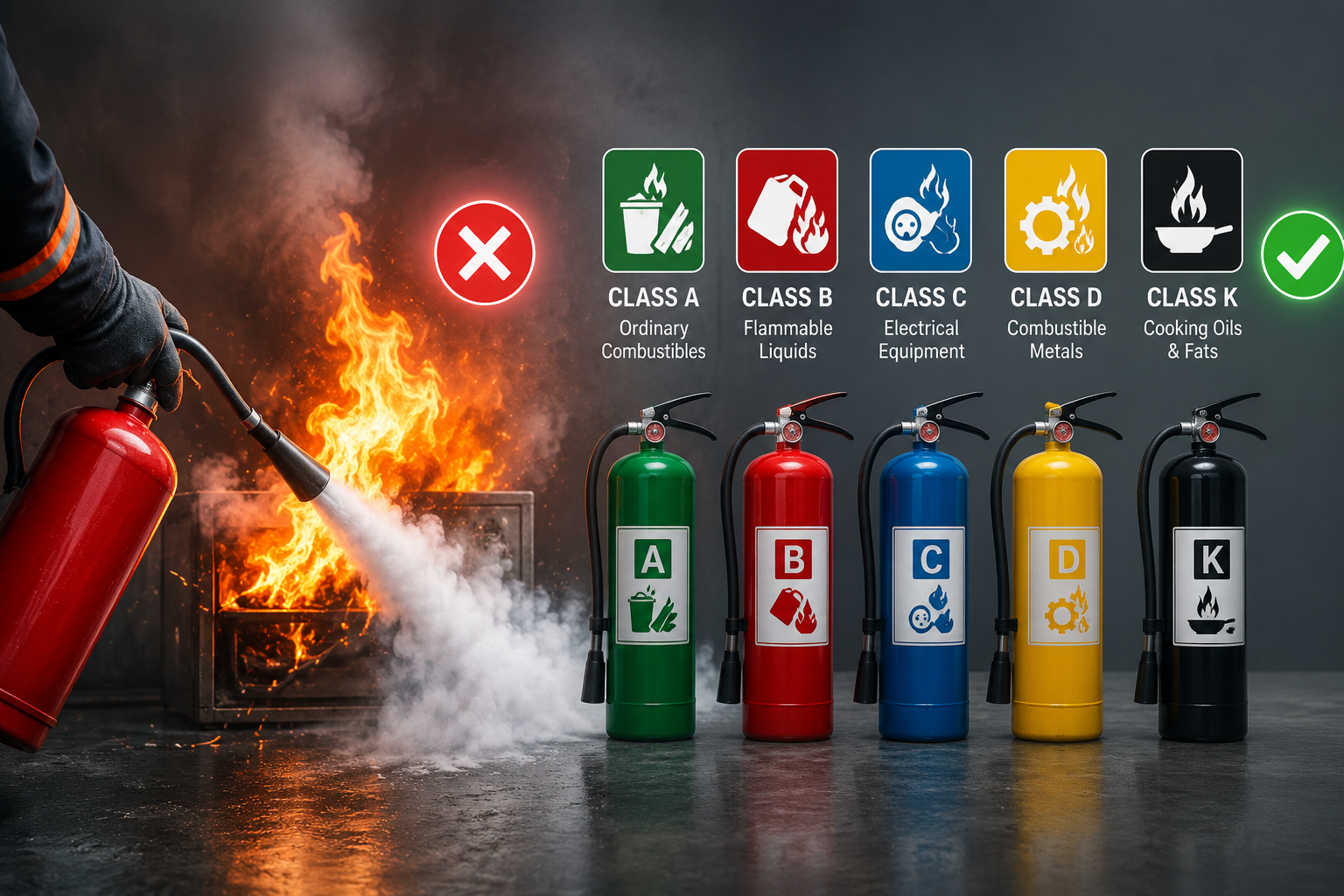
Understanding Class A B C D K fire categories is the first step toward effective fire protection.
Class A Fire
Class A fires involve ordinary combustible materials such as:
- Wood
- Paper
- Cloth
- Plastic
- Furniture
These are the most common household and office fires.
Class B Fire
These fires involve flammable liquids such as:
- Petrol
- Diesel
- Paint
- Oil
- Alcohol
Using water on these fires can spread the flames rapidly.
Class C Fire
Class C fires involve electrical equipment such as:
- Wiring
- Switchboards
- Appliances
- Servers
- Electrical panels
This category is extremely dangerous because of the risk of electric shock.
Class D Fire
Class D fires involve combustible metals like:
- Magnesium
- Titanium
- Sodium
These fires usually occur in industrial environments and require special extinguishing agents.
Class K Fire
Class K fires are caused by cooking oils and fats, commonly found in:
- Restaurants
- Commercial kitchens
- Hotels
- Food courts
These fires spread quickly and become highly intense within seconds.
Why Using the Wrong Fire Extinguisher Is Dangerous
One of the biggest mistakes during emergencies is using the wrong fire extinguisher. Many people panic and grab whichever extinguisher is nearby without checking whether it matches the fire type.
Here’s why that can be deadly:
-Water Can Spread Oil Fires
Throwing water on burning oil can cause the flames to explode outward. This often happens during kitchen fires.
-Electrical Fires Can Cause Shock
Using water-based extinguishers on electrical fires can result in severe electric shock and further damage to equipment.
-Certain Metals React Violently
Some metal fires react aggressively with water and become even more dangerous.
-Wrong Extinguishers Increase Smoke
Incorrect extinguishing agents may create toxic smoke, reducing visibility and increasing breathing hazards.
This is why knowing the right extinguisher matters just as much as having one.
Different Types of Fire Extinguishers
There are several types of fire extinguishers designed for specific fire hazards.
Water Extinguisher
Best for:
- Class A fires
Not suitable for:
- Electrical or oil fires
CO2 Extinguisher
Best for:
- Electrical fires
- Server rooms
- Offices
Leaves no residue and protects electronic equipment.
Foam Extinguisher
Best for:
- Class A and B fires
Commonly used in commercial spaces.
Dry Powder Extinguisher
Best for:
- Multi-purpose fire protection
- Industrial areas
- Vehicles
Works on multiple fire classes.
Wet Chemical Extinguisher
Best for:
- Kitchen fires
- Cooking oils
- Class K fires
Designed specifically for high-temperature oil fires.
How to Choose the Right Fire Extinguisher
Many people ask how to choose a fire extinguisher for their home or workplace. The answer depends on the type of fire risk in that area.
For example:
- Homes usually need ABC extinguishers.
- Kitchens require wet chemical extinguishers.
- Offices often need CO2 extinguishers.
- Factories may require multiple extinguisher types.
The safest approach is to conduct a proper fire risk assessment before installation.
Essential Fire Extinguisher Safety Tips
Following basic fire extinguisher safety tips can make a major difference during emergencies.
-Keep Extinguishers Accessible
Never block extinguishers with furniture or storage items.
-Train Employees and Family Members
People should know:
- How to operate extinguishers
- Which extinguisher matches which fire
- Emergency evacuation procedures
-Check Expiry Dates
Expired extinguishers may fail during emergencies.
-Inspect Pressure Levels
Low pressure can reduce extinguishing performance.
-Install the Right Type
Always place extinguishers according to fire hazards in that location.
The Biggest Fire Safety Mistake Most People Make
Many people believe that owning a fire extinguisher is enough. But without proper knowledge, the extinguisher may become useless during a real emergency.
Imagine trying to stop an electrical fire with water or using the wrong extinguisher on burning oil. Those few seconds of confusion can lead to severe injuries, property loss, or even fatalities.
Fire safety is not just about equipment. It is about awareness, preparation, and quick decision-making.
Conclusion
Fires do not give warnings. They spread fast, create panic, and become uncontrollable within minutes. That is why understanding fire classes is critical for every home, office, factory, and commercial space. The wrong extinguisher can turn a manageable situation into a life-threatening disaster.
The next time you see a fire extinguisher on a wall, ask yourself one question — will it actually work for the type of fire that may occur there?
Because in an emergency, knowing the difference between fire classes is not just knowledge. It could be the difference between safety and catastrophe.


