
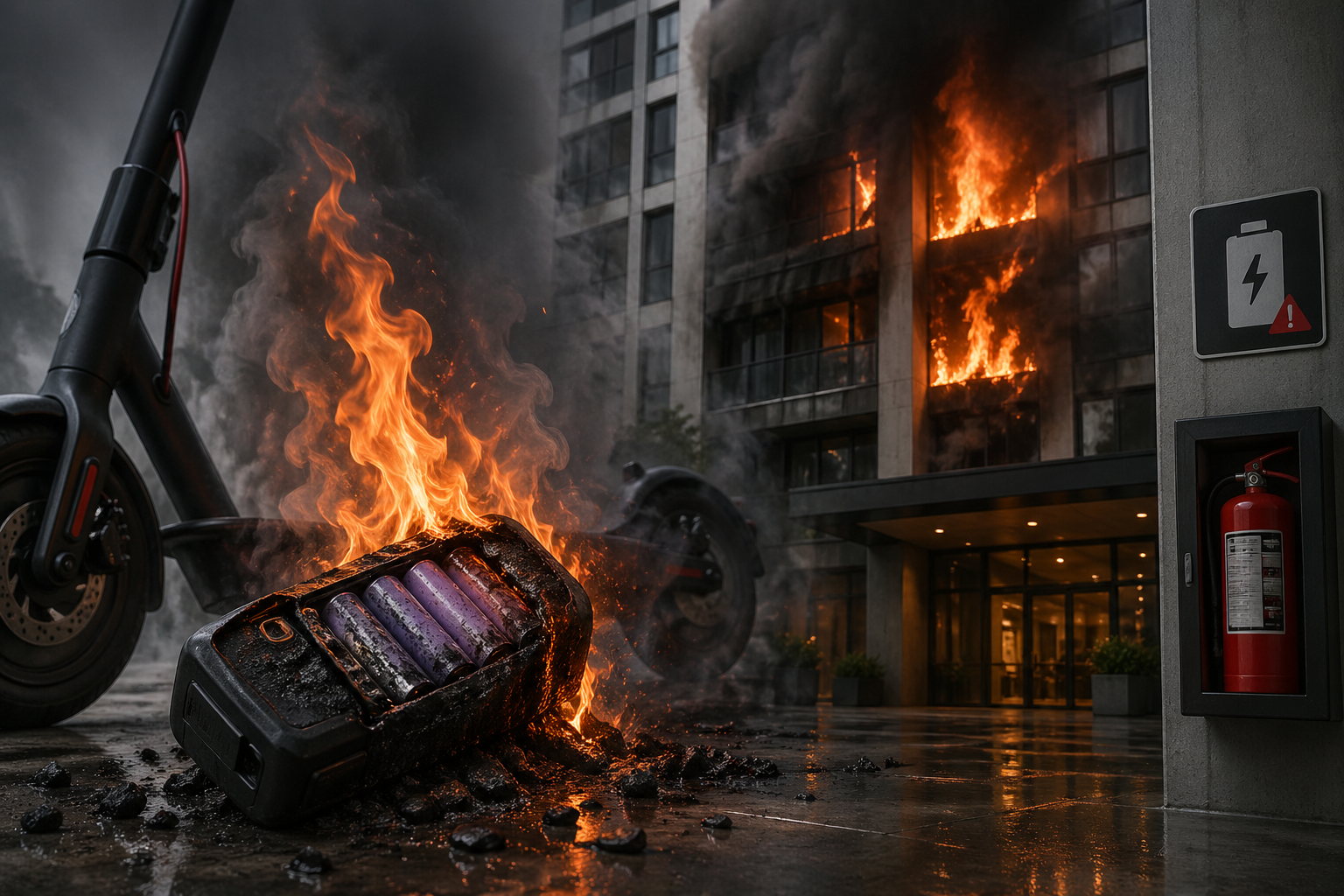
You charge your phone overnight, park your electric vehicle in the basement, and rely on battery-powered devices every single day—but have you ever thought about the danger quietly building around you? The lithium ion battery fire risk is one of the fastest-growing threats in modern buildings, yet it remains largely ignored until disaster strikes.
What makes this risk even more alarming is how unpredictable it is. A single faulty battery, an unnoticed defect, or even a simple overcharge can trigger a fire within seconds. The lithium ion battery fire risk doesn’t give warnings like traditional fires—it escalates rapidly, spreads aggressively, and becomes extremely difficult to control.
Despite this growing concern, most residential and commercial spaces are still not equipped to handle such incidents. Basic fire safety systems are no longer enough. The truth is, the lithium ion battery fire risk is already present in your surroundings—you just don’t see it yet.
Understanding Lithium-Ion Battery Fire Hazards in Buildings
Lithium-ion batteries behave very differently compared to traditional fire sources. When they fail, they can enter a condition called “thermal runaway,” where the battery rapidly overheats and releases flammable gases.
These lithium ion battery fire hazards in buildings are especially dangerous because:
- Fires can reignite even after being extinguished
- Toxic smoke spreads quickly through enclosed spaces
- Standard fire systems may fail to control the fire effectively
In high-rise buildings, basements, and EV parking zones, the risk multiplies due to limited ventilation and high battery concentration.
What Causes Lithium-Ion Battery Fires?
To tackle the issue, it’s important to understand the causes of lithium ion battery fires. Some of the most common triggers include:
- Overcharging or faulty chargers
- Physical damage or puncture of batteries
- Manufacturing defects
- Exposure to high temperatures
- Improper storage or handling
These factors often go unnoticed until it’s too late, making early detection and preventive measures critical.
Why Most Buildings Are Not Prepared
Despite the growing threat, many buildings rely on outdated fire safety systems designed for conventional fires. These systems are often ineffective against battery-related incidents.
Key gaps include:
- Lack of awareness about modern fire risks
- No dedicated safety protocols for battery storage
- Absence of advanced detection systems
- Inadequate training for occupants and staff
This gap between risk and preparedness is exactly why the lithium ion battery fire risk continues to rise in urban environments.
How to Prevent Lithium Battery Fires
Prevention is the most effective way to deal with this challenge. Understanding how to prevent lithium battery fires can significantly reduce the chances of an incident.
Here’s what buildings should focus on:
- Avoid overcharging devices and use certified chargers
- Store batteries in cool, dry, and ventilated areas
- Regularly inspect battery-powered equipment
- Limit bulk storage of batteries in confined spaces
- Educate residents and employees about safe usage
Simple steps like these can make a huge difference in minimizing risks.
Battery Fire Safety Measures for Buildings
Implementing proper battery fire safety measures for buildings is no longer optional—it’s essential.
Modern buildings should consider:
- Dedicated battery storage zones
- Fire-resistant enclosures for EV charging areas
- Advanced smoke and heat detection systems
- Emergency evacuation plans specific to battery fires
- Regular fire safety audits and drills
These measures help create a proactive safety environment rather than a reactive one.
The Role of Lithium Battery Fire Suppression Systems
Traditional fire extinguishers are often not enough. Investing in lithium battery fire suppression systems is crucial for effective control.
These systems are designed to:
- Quickly cool down overheating batteries
- Prevent thermal runaway from spreading
- Suppress toxic gas emissions
- Control fire re-ignition
Upgrading to specialized suppression solutions can significantly improve a building’s fire response capability.
Conclusion: Act Before It’s Too Late
The rise of lithium-ion batteries has transformed how we live—but it has also introduced a new category of fire risk that cannot be ignored. The lithium ion battery fire risk is real, growing, and often underestimated in most buildings today.
Waiting for an incident to happen is not an option. The need of the hour is awareness, upgraded safety systems, and proactive planning. Whether you’re a building owner, facility manager, or resident, taking action today can prevent a disaster tomorrow.
Because when it comes to fire safety, preparation isn’t just important—it’s lifesaving.


