
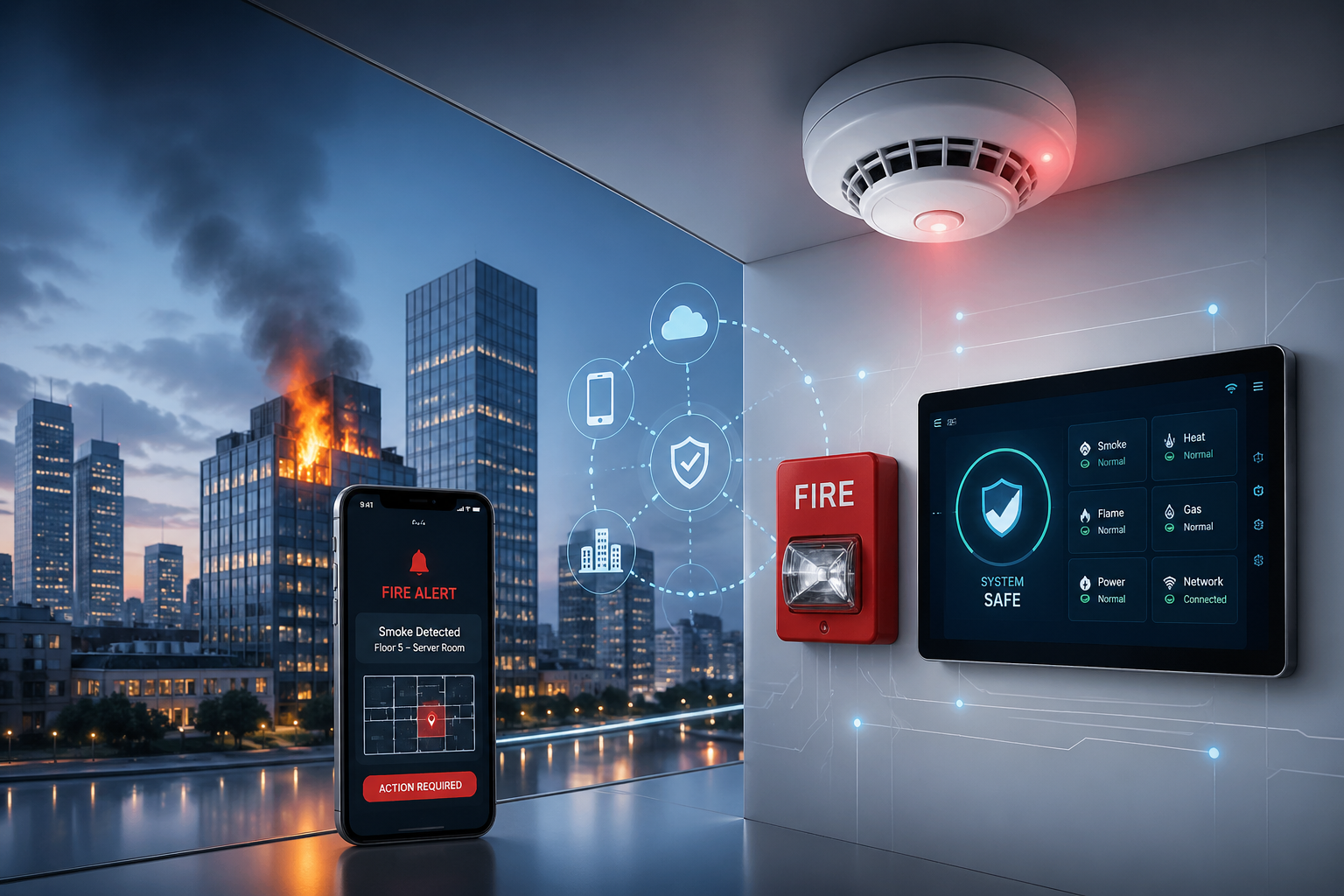
Imagine this: a small spark ignites in a corner of your building. Within seconds, it grows—but instead of waiting for visible smoke or heat, smart fire detection systems instantly sense the threat, alert authorities, and trigger preventive actions before the situation escalates. That’s not the future anymore—that’s 2026.
Today, smart fire detection systems are transforming how we approach safety, shifting from reactive responses to proactive prevention. Whether it’s homes, offices, or industrial spaces, smart fire detection systems are becoming the backbone of modern fire protection strategies—saving lives, reducing damage, and ensuring faster response times.
What Makes Fire Detection “Smart”?
Traditional fire alarms rely on smoke or heat thresholds. But modern systems go beyond that. Powered by AI-based fire detection technology, these systems analyze patterns, detect anomalies, and differentiate between real threats and false alarms.
For example, instead of reacting only to smoke, they can identify unusual temperature spikes, gas leaks, or even subtle environmental changes—long before a fire breaks out.
The Role of Advanced Technologies in 2026
Fire safety in 2026 is no longer just about alarms—it’s about intelligent ecosystems.
- Advanced fire alarm systems now integrate with building automation, enabling automatic evacuation procedures.
- IoT fire safety solutions connect devices across a network, allowing real-time monitoring from anywhere in the world.
- Early fire detection systems use predictive analytics to stop fires before they even start.
This interconnected approach ensures that every second counts—and is used wisely.
Why Businesses and Homes Are Adopting Smart Systems
The shift toward smarter systems isn’t just about technology—it’s about necessity.
- Faster Response Time: Immediate alerts reduce the risk of large-scale damage.
- Reduced False Alarms: Intelligent analysis ensures accuracy.
- Remote Monitoring: Keep an eye on safety even when you’re miles away.
- Cost Efficiency: Preventing a fire is always cheaper than recovering from one.
In high-risk environments like factories, warehouses, and commercial complexes, these systems are quickly becoming non-negotiable.
How Smart Systems Are Saving Lives
One of the biggest advantages of intelligent fire monitoring systems is their ability to act before humans even realize there’s a problem.
For instance, if a system detects abnormal heat patterns in electrical wiring, it can trigger alerts or even shut down the power supply—preventing a fire from starting altogether. This level of automation is redefining safety standards across industries.
Challenges to Consider
While the benefits are undeniable, adopting smart fire systems also comes with considerations:
- Initial installation costs can be higher
- Requires regular software updates and maintenance
- Needs proper training for effective use
However, when compared to the potential loss from a fire incident, these challenges are minor.
The Road Ahead: What to Expect Beyond 2026
The evolution doesn’t stop here. Future innovations may include:
- Integration with smart cities
- Drone-based fire detection
- Real-time AI decision-making during emergencies
As technology advances, fire safety will become even more predictive, automated, and reliable.


