
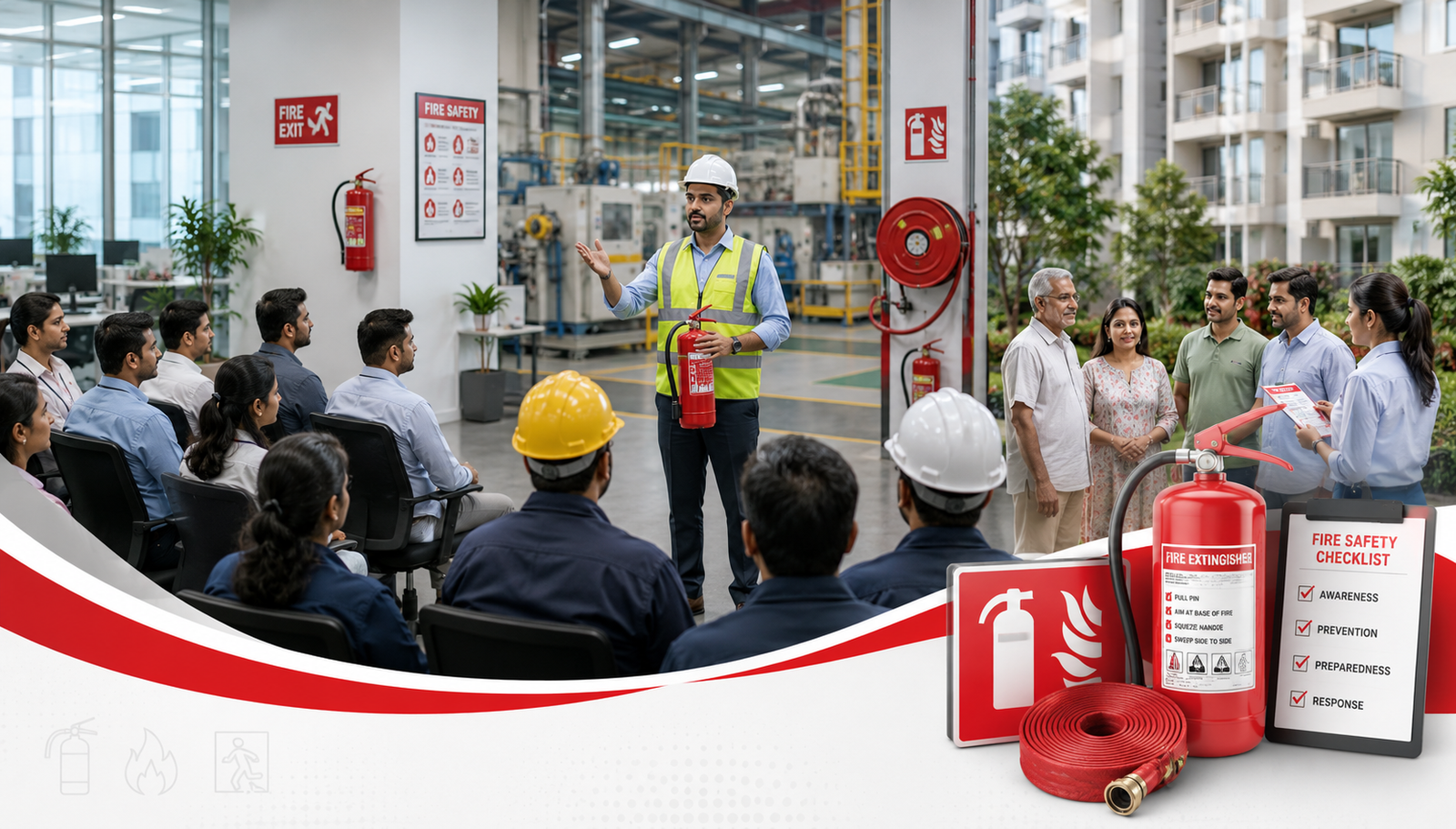
Fire incidents can happen anywhere—an office, a factory, or even a residential society. While installing fire extinguishers and alarm systems is important, people must also know how to respond during an emergency. Understanding fire safety training requirements is essential for protecting lives, reducing property damage, and ensuring legal compliance. Organizations and housing communities that follow proper fire safety training requirements are better prepared to handle emergencies effectively. Today, fire safety training requirements are no longer optional; they are a critical part of every safety management plan.
Why Fire Safety Training Matters
Many fire-related injuries and fatalities occur because people panic or do not know what actions to take during an emergency. Fire safety training helps occupants understand potential fire hazards, emergency response procedures, and the correct use of firefighting equipment. A trained workforce or community can react quickly, reducing the impact of a fire incident and improving overall safety.
Fire Safety Training Requirements for Offices
Modern offices contain electrical equipment, servers, air-conditioning systems, and large numbers of employees. These factors increase the risk of electrical fires and emergency situations.
Key training requirements for offices include:
- Identification of common workplace fire hazards
- Proper use of fire extinguishers
- Understanding emergency alarm systems
- Conducting regular fire drills
- Safe evacuation techniques
- Assembly point management
Implementing regular workplace fire safety training ensures employees know exactly what to do when an alarm sounds, minimizing confusion and panic.
Fire Safety Training Requirements for Factories
Factories often handle machinery, chemicals, combustible materials, and high-temperature processes. Because of these risks, fire safety training in industrial facilities must be more comprehensive.
Essential training areas include:
- Hazard identification and risk assessment
- Handling flammable materials safely
- Emergency shutdown procedures
- Use of hydrant systems and firefighting equipment
- Fire drill participation
- Incident reporting procedures
Strong factory fire safety compliance programs help industries meet regulatory requirements while protecting workers and valuable assets.
Fire Safety Training Requirements for Residential Societies
Many residential societies focus on installing fire protection systems but overlook resident awareness. During an emergency, residents must know evacuation routes and safety protocols.
Important training topics include:
- Emergency response awareness
- Safe use of electrical appliances
- Fire extinguisher demonstrations
- Evacuation route familiarization
- Fire safety awareness for children and senior citizens
- Emergency communication procedures
Adopting effective residential society fire safety measures creates a safer environment for all residents and visitors.
Employee Awareness: The First Line of Defense
No fire protection system can replace informed and trained people. Employees who understand emergency protocols can detect risks early and respond appropriately. Regular employee fire emergency training helps staff remain calm, communicate effectively, and support evacuation efforts during critical situations.
The Importance of Fire Drills and Evacuation Planning
Training sessions should always be supported by practical drills. Fire drills help identify weaknesses in emergency response plans and improve preparedness. Well-designed fire evacuation and safety procedures ensure everyone can exit the building quickly and safely during an emergency.
Organizations and residential communities should conduct periodic drills, review lessons learned, and continuously improve their emergency plans.
Legal and Compliance Considerations
Fire safety regulations in India require organizations and residential establishments to maintain adequate fire protection measures and emergency preparedness programs. Regular training records, fire drills, and safety audits demonstrate commitment to compliance and help reduce liability risks.
Following established fire safety trainingrequirements also builds confidence among employees, residents, visitors, and stakeholders. When people know they are protected by a trained and prepared community, they feel safer and more secure.
How Often Should Fire Safety Training Be Conducted?
Experts generally recommend:
- Annual fire safety training for all occupants
- Fire drills at least twice a year
- Refresher training for new employees and residents
- Specialized training for emergency response teams
- Additional sessions after major facility changes
Consistent fire safety training implementation ensures preparedness remains strong throughout the year.
Conclusion: Training Saves Lives Before Equipment Does
Fire extinguishers, hydrants, and alarm systems are valuable tools, but their effectiveness depends on the people using them. Whether you manage an office, operate a factory, or oversee a residential society, investing in fire safety training is one of the most effective ways to protect lives and property. The question is not whether a fire emergency will occur, but whether your people will be prepared when it does. A well-trained workforce and informed community can turn a potential disaster into a controlled and safe response.


