
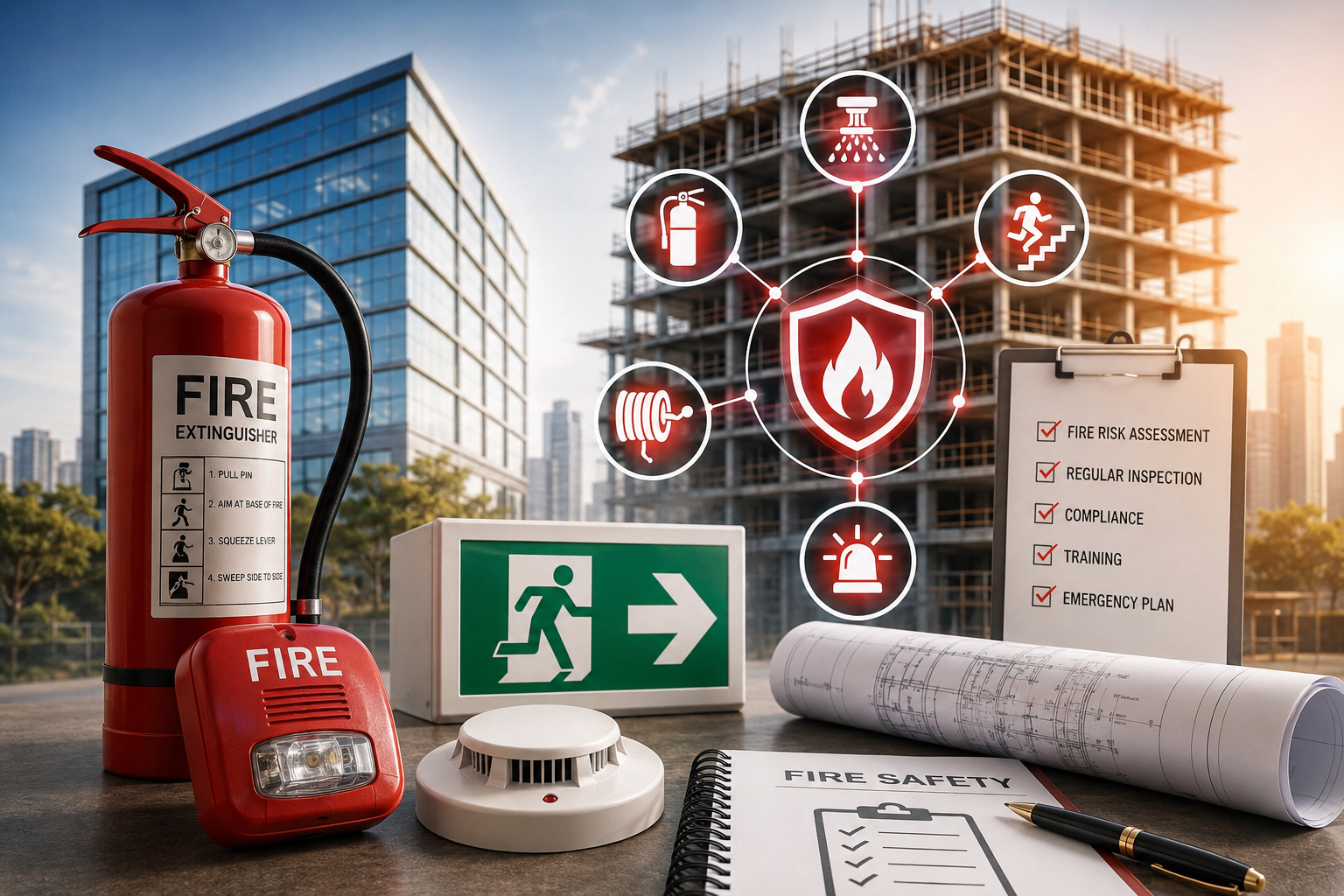
Fire safety regulations in India are evolving rapidly, and the introduction of NBC 2026 fire safety compliance is expected to bring major improvements in how buildings are designed, protected, and maintained. Whether you own a commercial property, manage a residential complex, or oversee an industrial facility, understanding NBC 2026 fire safety compliance is becoming essential for long-term safety and legal compliance. Businesses, builders, and facility managers are already preparing for the changes because NBC 2026 fire safety compliance focuses strongly on prevention, faster emergency response, and smarter fire protection systems.
The latest updates are not just about stricter rules. They are about creating safer environments for occupants, reducing fire risks, and improving emergency preparedness across all types of buildings. With urban infrastructure growing rapidly in India, the revised code is expected to reshape how building safety standards are implemented nationwide.
Understanding NBC 2026 and Its Importance
The National Building Code 2026 fire safety rules are designed to improve fire prevention measures and strengthen emergency management systems in modern buildings. The updated framework focuses on advanced fire detection systems, evacuation planning, fire-resistant construction materials, and better coordination between building owners and local authorities.
As cities continue to expand vertically, the need for updated fire safety practices has become more important than ever. Older systems and outdated compliance methods often fail to meet the demands of modern infrastructure. NBC 2026 aims to bridge this gap by introducing more practical and technology-driven safety requirements.
Key Changes Expected in NBC 2026
-Stronger Fire Detection and Alarm Systems
One of the major changes under the revised code is the increased focus on automated fire detection systems. Modern alarm systems connected with centralized monitoring are expected to become mandatory for many commercial and high-rise buildings.
These systems can detect smoke, heat, or fire hazards early, helping occupants evacuate quickly and reducing damage.
-Improved Evacuation and Exit Planning
The updated code emphasizes wider staircases, clearly marked exits, emergency lighting, and evacuation routes. Building owners may need to redesign certain layouts to ensure faster movement during emergencies.
This is especially important for malls, offices, hospitals, hotels, and residential towers where large numbers of people gather daily.
-Advanced Fire Suppression Requirements
The revised NBC 2026 fire protection standards are likely to encourage the use of advanced fire suppression technologies such as automatic sprinkler systems, water mist systems, and eco-friendly fire extinguishing solutions.
Modern fire suppression systems help control fires at an early stage before they spread across the building.
-Increased Accountability for Building Owners
Building owners and facility managers will likely face stricter responsibilities regarding inspections, maintenance, and staff training. Regular audits and documentation may become mandatory to ensure systems remain functional at all times.
This change encourages proactive fire safety management rather than reactive action after incidents occur.
Impact on Commercial Buildings
The new fire safety regulations for commercial buildings are expected to directly impact offices, shopping malls, hotels, warehouses, factories, and mixed-use developments. Commercial properties often face higher fire risks due to electrical loads, occupancy levels, and equipment usage.
Businesses may need to invest in:
- Advanced fire alarm systems
- Updated fire extinguishers
- Emergency evacuation training
- Smoke management systems
- Fire-resistant construction materials
- Annual fire safety audits
Although these upgrades may increase initial costs, they significantly reduce long-term risks and liabilities.
Why Building Owners Should Prepare Early
Waiting until regulations become mandatory can create unnecessary pressure for businesses and property owners. Early preparation offers several advantages:
- Easier budgeting for upgrades
- Better safety for occupants
- Reduced risk of penalties
- Improved insurance compliance
- Enhanced brand reputation
- Faster approval from local authorities
Organizations that prepare early are more likely to adapt smoothly once the new regulations are officially implemented.
Role of Technology in Fire Safety Compliance
Technology is becoming a major part of modern fire protection systems. Smart fire alarms, IoT-enabled monitoring systems, AI-based risk detection, and automated suppression systems are expected to play a larger role under the updated code.
These systems provide real-time alerts and help emergency teams respond faster. For large commercial buildings and industrial facilities, technology-driven safety solutions can save lives and minimize operational losses.
How NBC 2026 Can Improve Public Safety
The biggest advantage of the updated NBC 2026 compliance guidelines is improved public safety. Better fire prevention systems, faster emergency response, and stronger evacuation planning can significantly reduce casualties and property damage during fire incidents.
The revised standards are expected to create safer workplaces, residential communities, healthcare facilities, educational institutions, and industrial environments across India.
Conclusion
Fire safety is no longer just a legal requirement — it is a responsibility that directly impacts lives, businesses, and communities. The upcoming NBC 2026 updates are a clear indication that India is moving toward smarter, stronger, and more reliable fire protection standards.
For building owners, businesses, and facility managers, this is the right time to review existing systems, upgrade safety infrastructure, and prepare for future compliance requirements. Those who act early will not only avoid penalties but also create safer spaces for everyone who enters their buildings.
As fire risks continue to evolve, staying prepared is the smartest investment any organization can make. Safe buildings build stronger trust, better business continuity, and a more secure future for all.


