
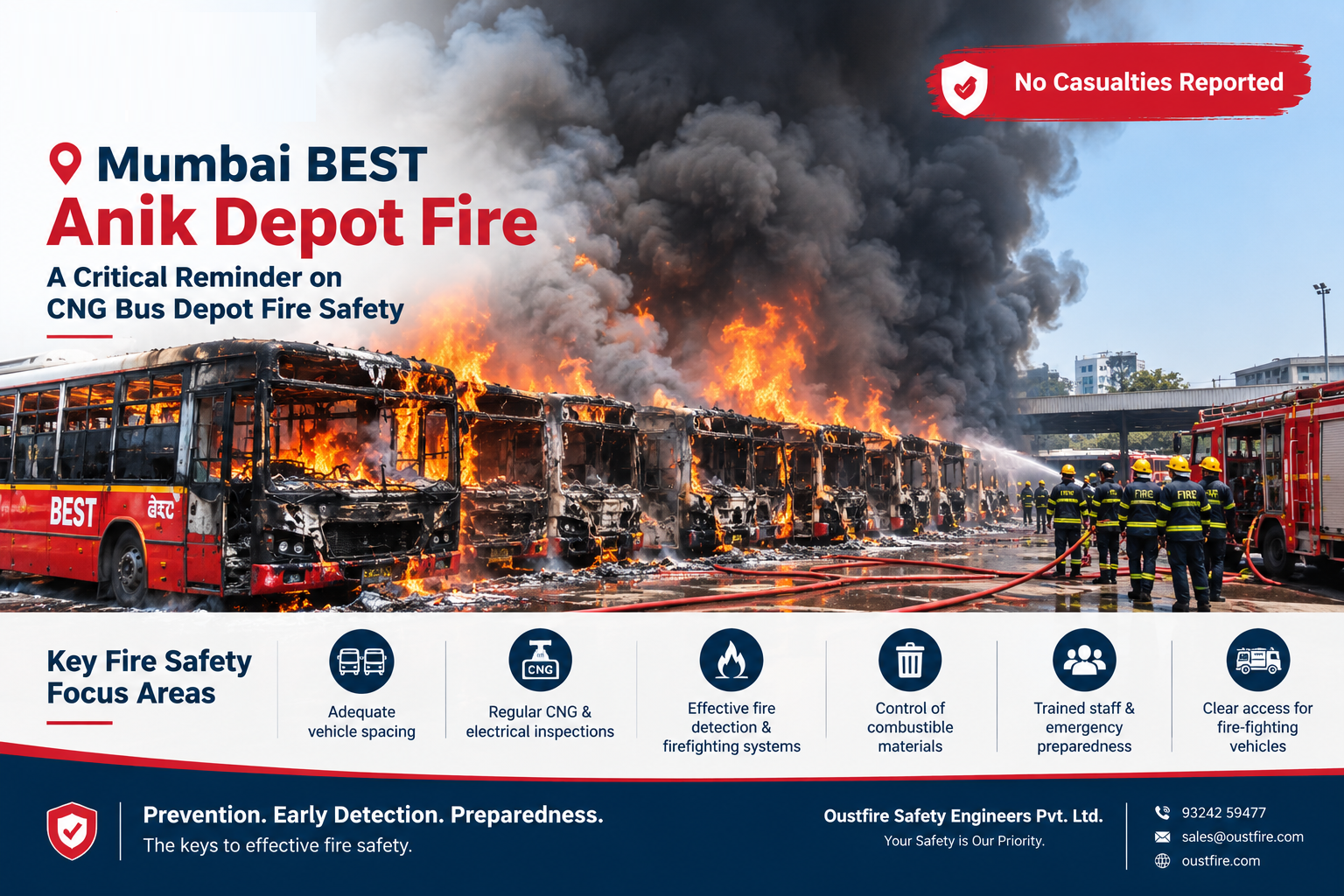
A major fire broke out at the BEST Anik bus depot in Sion, Mumbai, involving several parked CNG buses. The fire rapidly spread among the vehicles, resulting in extensive damage to multiple buses. Fire and emergency response teams were deployed to control the blaze, while efforts were made to prevent the fire from spreading to other vehicles and areas of the depot.
Although no casualties were reported, the incident highlights the serious fire risks present at large bus depots where CNG-fuelled vehicles, electrical systems, fuel-related components and combustible materials are handled or stored in close proximity. Such locations require strict fire prevention measures, regular inspection of vehicles and gas systems, adequate firefighting arrangements and trained personnel capable of responding immediately during an emergency.
The incident also demonstrates how quickly a fire involving parked vehicles can escalate when multiple buses are positioned close to each other. Heat radiation, burning vehicle components and possible damage to gas lines can further increase the intensity of a fire and make firefighting operations more challenging.
Incident Overview
The fire broke out at the BEST Anik depot where several buses were parked. Multiple CNG buses were affected by the blaze, with several vehicles reportedly gutted and others damaged.
Firefighters reached the location with fire engines, water tankers and specialised emergency vehicles. The firefighting operation continued until the flames were brought under control. Fire personnel also worked to prevent the fire from spreading to additional buses and surrounding infrastructure.
Fortunately, there were no reported fatalities or major injuries in the incident. However, the extent of damage to the buses demonstrates the potential consequences of a fire in a densely occupied vehicle depot.
Possible Cause and Fire Risk Factors
The exact cause of the fire remains under investigation. Preliminary observations have raised the possibility of an external ignition source coming into contact with combustible material near the parked buses. Damage to gas pipelines during the incident may also have contributed to the intensity of the fire.
It is important to note that the presence of CNG does not automatically mean that CNG itself caused the fire. However, any fire involving CNG-powered vehicles requires immediate isolation and careful emergency handling because heat exposure can damage gas system components and create additional hazards.
Other factors that can influence fire spread in bus depots include inadequate vehicle spacing, combustible waste or materials, electrical faults, poor housekeeping and delayed detection of the initial fire.
Key Fire Safety Lessons
The incident highlights several important fire-safety measures for bus depots and vehicle parking facilities:
- Adequate vehicle spacing: Buses should be parked with sufficient separation to reduce the possibility of fire spreading from one vehicle to another.
- Regular CNG system inspection: Gas pipelines, valves, cylinders, connections and associated components should be inspected and maintained periodically.
- Electrical safety: Electrical wiring, batteries, charging systems and other electrical equipment should undergo regular inspection to identify potential faults.
- Control of combustible materials: Waste, packaging materials, oil-contaminated materials and other combustibles should not be allowed to accumulate near parked vehicles.
- Accessible firefighting equipment: Fire extinguishers, hydrant systems, hose reels and other firefighting equipment must remain easily accessible and properly maintained.
- Early fire detection: Appropriate fire detection and alarm systems can help identify a fire at an early stage and enable faster intervention.
- Emergency response planning: Depot staff should be trained in emergency procedures, including evacuation, vehicle isolation, emergency shutdown and communication with fire services.
- Clear access for fire tenders: Internal roads and access routes must remain unobstructed to allow fire vehicles to reach the affected area quickly.
- Regular fire drills: Mock drills and emergency training can help staff respond effectively during an actual fire.
- Preventive maintenance: Fire protection systems and vehicle safety systems should be regularly inspected, tested and maintained rather than being relied upon only during emergencies.
Conclusion
The Mumbai BEST Anik Depot fire is a significant reminder that vehicle depots require a specialised and proactive approach to fire safety. A single ignition source can quickly develop into a major incident when multiple buses are parked together, particularly when the vehicles contain combustible components and are powered by fuel systems that require specialised emergency handling.
Fire safety at bus depots should therefore go beyond simply keeping fire extinguishers on site. It should involve a complete safety framework covering fire prevention, electrical safety, CNG system inspection, vehicle parking arrangements, early detection, firefighting infrastructure, emergency access, staff training and regular fire drills.
Regular inspection and maintenance of fire protection systems are equally important. Fire Hydrant Systems, Fire Alarm & Detection Systems, Fire Extinguishers and other safety installations must be properly designed, tested and maintained to ensure they are ready to perform when required.
Oustfire Safety Engineers Pvt. Ltd. provides comprehensive fire protection and safety solutions for industrial, commercial and infrastructure facilities, including:
- Fire Hydrant Systems
- Fire Sprinkler Systems
- Fire Alarm & Detection Systems
- Gas Suppression Systems
- Fire Extinguishers
- Fire Safety AMC & Maintenance Services
A strong fire safety system is not only about protecting property—it is about preventing incidents, protecting lives and ensuring business continuity.
Your Safety is Our Priority.
📞 93242 59477
📧 sales@oustfire.com
🌐 oustfire.com


