
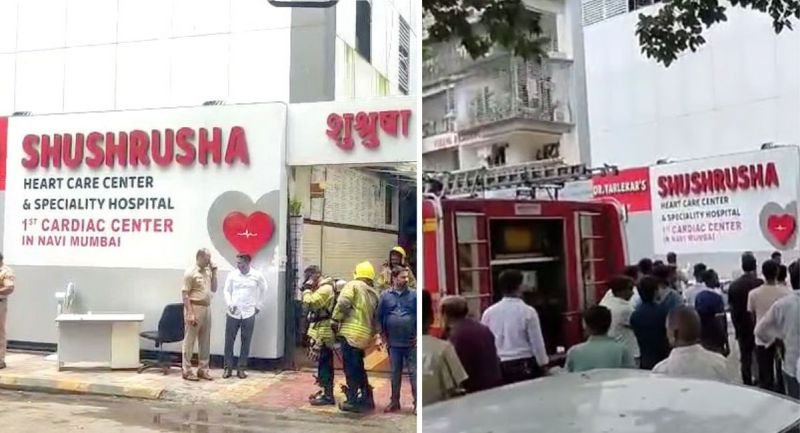
On Monday around 12:00 PM, Shushrusha Hospital in Sector 6, Nerul, Navi Mumbai, experienced a serious fire in its basement X-ray/printing area. Eyewitnesses and initial fire department reports point to an AC compressor short circuit as the likely cause. Stationary items and other combustible materials near the unit caught fire, generating dense smoke that traveled through vertical ducts and lift shafts, quickly affecting patient wards on the upper floors.
At the time of the fire, 21 patients were admitted — including elderly individuals and those in intensive care. Due to the rapid smoke spread, the situation was critical, but prompt action by hospital staff, relatives present, and the Navi Mumbai Municipal Corporation (NMMC) fire brigade ensured that all patients were safely evacuated without loss of life.
Emergency Response
-
Fire Brigade Deployment: Multiple fire engines from Nerul and Vashi fire stations reached the hospital within minutes.
-
Evacuation Efforts: ICU patients were moved first, some to the hospital’s Panvel branch and others to nearby medical facilities.
-
Smoke Management: Firefighters concentrated on isolating the fire to the basement while ventilating smoke from patient areas.
-
Public & Community Support: Local community groups offered temporary shelter, with some patients accommodated at nearby facilities during the firefighting operation.
Extent of Damage
-
Basement: Reportedly gutted, with complete damage to equipment and documents stored there.
-
Upper Floors: Smoke infiltration affected wards and corridors, causing temporary disruption of services.
-
Structural Impact: No major collapse or fire spread beyond the basement was reported, thanks to timely containment.
Probable Cause
Preliminary findings suggest that the ignition originated from an electrical short circuit in an AC compressor unit located in the basement. Stored combustible materials in close proximity likely intensified the fire. The dense smoke was carried upwards through ducts and lift shafts, an issue often seen in hospital fires when compartmentation is inadequate.
Regulatory and Safety Concerns
-
Expired Fire Safety Audit Certificate: At least one major news outlet reported that the hospital’s fire safety audit certificate had expired, raising questions about compliance and inspection frequency.
-
Basement Usage: Storage of flammable materials and critical electrical equipment together in a confined space is a known high-risk setup.
-
Smoke Control Deficiencies: The movement of smoke through ducts indicates either inadequate sealing or malfunctioning smoke barriers.
Broader Context — Hospital Fire Risks
Hospitals are considered high-risk facilities for fire incidents due to:
-
Continuous use of high-load electrical systems.
-
Presence of vulnerable occupants who cannot self-evacuate.
-
Storage of oxygen cylinders, chemicals, and flammable medical supplies.
-
Complex layouts that may delay evacuation.
This incident echoes past hospital fire tragedies in India, where regulatory lapses and inadequate emergency preparedness have had devastating consequences.
Investigation Focus Areas
Authorities will likely examine:
-
Exact ignition source — forensic electrical inspection of the AC unit and surrounding circuits.
-
Maintenance records — for both electrical and fire safety systems.
-
Fire safety compliance — verification of audit certificate status and any pending corrective measures.
-
Evacuation readiness — staff training, drill frequency, and adherence to emergency procedures.
-
Smoke control measures — duct sealing, fire door integrity, and ventilation system design.
Recommendations for Prevention
-
Regular Fire Safety Audits: Ensure all certifications are current and deficiencies addressed promptly.
-
Safe Equipment Layout: Keep electrical equipment and combustible storage in separate, fire-resistant compartments.
-
Functional Smoke Control: Maintain sealed ducts, operational exhaust systems, and regularly test fire doors.
-
Evacuation Drills: Conduct quarterly drills to familiarize staff with patient relocation procedures.
-
Community Partnerships: Pre-arrange agreements with nearby hospitals for patient transfer in emergencies.
Conclusion
The Shushrusha Hospital fire in Nerul serves as a stark reminder of the constant vigilance required in healthcare facilities. While the quick response by staff and firefighters prevented fatalities, the incident highlights vulnerabilities in infrastructure, fire prevention measures, and regulatory enforcement. Hospitals, given their unique risks and patient dependency, must treat fire safety not as a statutory formality but as a core operational priority. Moving forward, a thorough investigation, accountability for lapses, and systemic reforms in fire safety compliance are essential to prevent future incidents of this nature.


