
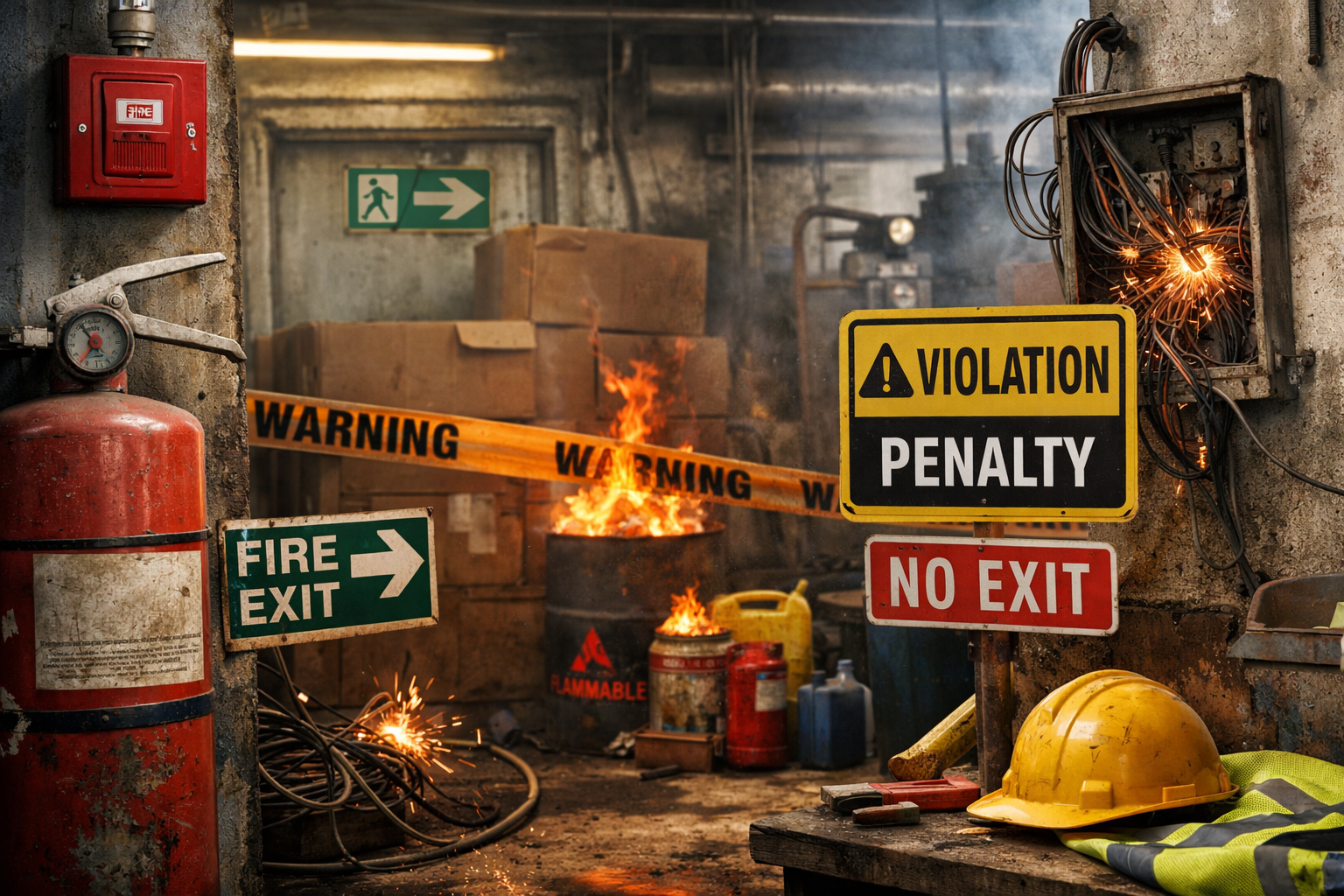
Industrial workplaces deal with machinery, electrical systems, chemicals, and flammable materials every day. This makes fire prevention a critical responsibility for every organization. Unfortunately, many companies ignore essential safety requirements until an accident occurs. Industrial fire safety violations are one of the main reasons industries face legal penalties, operational shutdowns, and financial losses. When industrial fire safety violations occur, they not only threaten employee safety but also damage property and business reputation. Authorities are becoming stricter with inspections, and repeated industrial fire safety violations can lead to serious legal consequences for industries that fail to follow proper safety practices.
Understanding the most common mistakes industries make can help businesses prevent risks and stay compliant with safety regulations.
1. Lack of Fire Safety Compliance in Industries
One of the biggest issues observed during inspections is the lack of fire safety compliance in industries. Many factories install fire protection systems only during initial approvals but fail to maintain them regularly.
Authorities expect industries to ensure that fire extinguishers, hydrants, alarm systems, and emergency exits remain fully functional at all times. When companies neglect these requirements, it becomes a serious violation that can lead to penalties or even temporary closure.
2. Ignoring Industrial Fire Safety Regulations in India
Every factory must follow industrial fire safety regulations India to ensure a safe working environment. These regulations include proper installation of fire protection systems, safe storage of hazardous materials, and regular inspection of fire safety equipment.
Ignoring these regulations increases the chances of fire incidents and puts workers at risk. Regulatory bodies regularly monitor compliance, and industries that fail to meet the required standards may face legal notices and strict enforcement actions.
3. Improper Storage of Flammable Materials
Industrial environments often deal with chemicals, fuels, and combustible materials. If these materials are stored improperly, they can quickly ignite and cause a fire emergency.
Proper labeling, ventilation, and storage practices are essential to minimize risks. Many accidents occur because industries fail to follow factory fire safety rules related to the handling and storage of hazardous substances.
4. Poor Maintenance of Fire Safety Equipment
Fire extinguishers, hydrants, sprinklers, and alarm systems are crucial for controlling fires in their early stages. However, many companies fail to conduct regular inspections or servicing of these systems.
Without proper maintenance, equipment may not function during emergencies. Regular servicing and fire safety audit for industries help identify faults and ensure that safety systems are always ready to respond to potential fire incidents.
5. Blocked Emergency Exits and Escape Routes
Emergency exits play a critical role during fire incidents. Unfortunately, many industries block exit routes with materials, equipment, or storage items.
During emergencies, even a small delay in evacuation can lead to severe injuries or loss of life. Authorities treat such industrial fire safety violations very seriously because they directly impact worker safety and emergency response efficiency.
6. Lack of Fire Safety Training for Employees
Even the best fire protection systems cannot prevent accidents if employees are not trained to handle emergencies. Many industries overlook the importance of fire safety training and mock drills.
Workers must know how to operate fire extinguishers, identify hazards, and follow evacuation procedures. Lack of training can increase panic during emergencies and lead to higher damage and casualties.
7. Consequences of Fire Safety Violations
Ignoring fire safety requirements can result in serious fire safety violations penalties imposed by regulatory authorities. These penalties may include heavy fines, suspension of operations, cancellation of safety approvals, or legal action against the company.
Beyond financial losses, fire incidents can damage a company’s reputation and disrupt business operations for months.
Conclusion: Safety Today Prevents Disaster Tomorrow
Fire safety is not just a legal requirement—it is a responsibility that protects lives, assets, and businesses. Industries that ignore safety measures often realize the consequences only after accidents occur. By following regulations, maintaining equipment, and training employees, organizations can prevent major disasters and ensure a safe working environment.
A proactive approach to fire safety helps industries avoid risks, protect workers, and maintain uninterrupted operations. In the end, investing in safety today is always far more valuable than dealing with the consequences of negligence tomorrow. 🔥


