
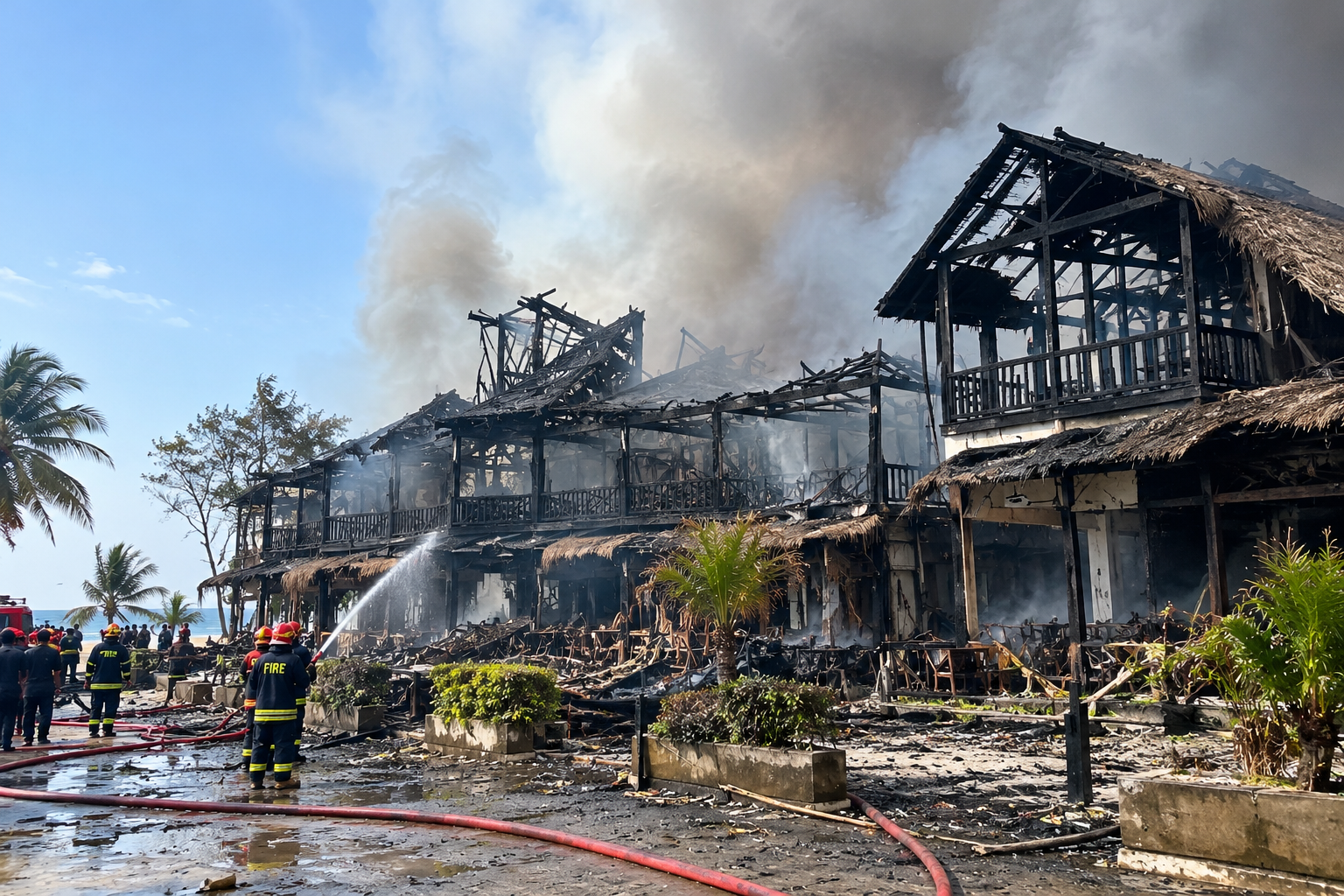
A devastating fire at a beach resort in southeastern Bangladesh claimed at least 10 lives on 17 October 2026, raising serious concerns about fire safety standards in tourist accommodations. The fire broke out at Tuptup Resto & Resort, located in the Patuartek area near Inani Beach in Cox’s Bazar, a popular destination for domestic tourists.
The incident has drawn attention to the importance of fire prevention, regulatory compliance and emergency preparedness in hotels, resorts and other hospitality establishments. Reports from local authorities indicate that the resort had previously been flagged for fire safety concerns and was operating without a valid fire safety licence.
The tragedy serves as a reminder that fire safety is not simply a regulatory formality. It is a fundamental responsibility of every property owner and operator, particularly in buildings where guests sleep overnight and may be unfamiliar with emergency exits and evacuation routes.
2. Incident Details
The fire broke out in the early morning, when guests were reportedly asleep inside the resort. The flames spread rapidly through the predominantly wooden structure, leaving occupants with limited time to react and escape.
According to reports, at least 10 people lost their lives, while several others were injured. Women and children were among the victims. Some occupants reportedly attempted to seek refuge in washrooms while trying to escape the advancing fire.
The resort was severely damaged by the blaze. Fire Service and Civil Defence personnel, along with local authorities and other emergency responders, took part in firefighting and rescue operations.
Reports indicate that the fire was brought under control by approximately 11:00 a.m. on 17 October. The incident was subsequently followed by official statements concerning the property’s fire safety deficiencies and an investigation into the circumstances surrounding the tragedy.
3. Fire Safety Violations and Regulatory Concerns
One of the most concerning aspects of this incident is the reported lack of essential fire safety arrangements at the resort.
According to reports published by Bangladeshi news organisations, the Fire Service and Civil Defence stated that the establishment was operating without a valid fire safety licence. Officials also indicated that the property had been inspected in June 2026 and warned about fire-related hazards.
Despite the earlier warning, the resort continued operating. Following the fatal incident, concerns were raised about compliance with fire safety requirements and whether the necessary corrective measures had been implemented.
Reports also indicated that the premises lacked basic fire protection provisions, including portable fire extinguishers, fire alarm systems and a fire safety plan.
These reported deficiencies highlight the importance of acting on inspection findings promptly. Identifying a hazard is only the first step; the responsible organisation must correct the problem and verify that the building is safe for occupation.
A functioning fire safety system requires more than equipment installed for appearance. It requires appropriate design, proper installation, regular inspection, maintenance and trained personnel who understand how to respond during an emergency.
4. Why Did the Fire Spread So Quickly?
Although the exact cause of the fire remains under investigation, reports indicate that the resort’s predominantly wooden construction contributed to the rapid spread of flames. Fire service officials also cited strong coastal winds as a factor that helped the fire spread.
Several fire safety considerations are particularly relevant to this type of incident.
A. Combustible building materials
Wood and other combustible construction materials can allow fire to spread rapidly when exposed to sustained heat and flames. Wooden interiors, furnishings, decorative materials and other combustible contents can further increase the amount of fuel available to a fire.
Where combustible materials are used, appropriate fire-resistant design measures, compartmentation and suitable detection and suppression arrangements become especially important.
B. Absence of early-warning systems
A fire alarm system is essential for warning occupants as soon as smoke or fire is detected. This is particularly important in hotels and resorts, where guests may be asleep and unfamiliar with the building layout.
Without effective early warning, people may lose valuable time before recognising the danger and beginning evacuation.
C. Lack of immediately available firefighting equipment
Portable fire extinguishers can help trained occupants tackle a small fire during its early stages, where it is safe to do so and an escape route remains available.
However, extinguishers are not a substitute for evacuation or professional firefighting. They must be suitable for the expected fire risks, correctly positioned, maintained and accessible.
D. Emergency escape and evacuation challenges
Guests in unfamiliar buildings may not know where the nearest exits are located. Smoke, darkness, confusion and crowded passageways can make evacuation even more difficult.
Clearly marked exits, illuminated emergency signs, unobstructed escape routes and regular evacuation drills are essential for reducing these risks.
E. Wind and environmental conditions
Strong winds can intensify a fire’s development and carry flames or burning debris towards nearby combustible materials. Properties in coastal and other exposed locations should consider local environmental conditions when assessing fire risk and planning emergency response.
5. Essential Fire Safety Measures for Hotels and Resorts
This tragedy highlights practical measures that hospitality establishments should prioritise to protect guests, employees and property.
5.1 Install suitable fire detection and alarm systems
Hotels and resorts should have appropriately designed fire detection and alarm systems based on the building’s layout, occupancy and applicable regulations.
Smoke detectors, heat detectors where appropriate, manual call points and audible or visual alarms should be installed in suitable locations. The systems must be tested and maintained according to applicable standards and manufacturer recommendations.
An alarm should alert occupants promptly and provide enough warning for them to evacuate safely.
5.2 Provide suitable fire extinguishers and firefighting systems
Portable extinguishers should be selected according to the anticipated fire hazards and installed at accessible, clearly identified locations.
Larger or higher-risk properties may require additional protection, such as fire hydrant systems, hose reels, automatic sprinkler systems or other suppression systems, depending on their design and applicable requirements.
All equipment should be inspected, maintained and kept ready for use.
5.3 Maintain safe electrical installations
Electrical faults can be a source of ignition in buildings. Resort operators should ensure that electrical installations are designed and maintained by qualified personnel.
Damaged cables, overloaded circuits, unsafe temporary connections and poorly maintained electrical equipment should be addressed immediately. Periodic inspections can help identify hazards before they develop into emergencies.
5.4 Ensure safe escape routes and emergency exits
Emergency exits must be clearly identified and kept unobstructed. Exit doors, stairways, corridors and escape routes should be suitable for the building’s occupancy and comply with applicable regulations.
Emergency lighting and exit signage should remain functional during a power failure. Guests should be able to identify a safe route without relying on staff instructions alone.
5.5 Prepare and practise an emergency response plan
Every hotel or resort should maintain a written fire emergency plan appropriate to its size, layout and occupancy.
The plan should identify evacuation routes, assembly points, emergency contacts, staff responsibilities and procedures for assisting children, elderly guests and people with disabilities.
Staff training and regular drills help employees respond confidently and guide guests away from danger.
5.6 Conduct regular fire safety inspections
Fire safety inspections should cover alarms, extinguishers, electrical systems, emergency lighting, exits, escape routes and other relevant protective measures.
Inspection findings must be documented, assigned to responsible personnel and corrected within an appropriate timeframe. Any official fire safety notice should receive immediate attention, and required approvals or licences should be obtained before operating.
5.7 Assess the risks associated with combustible structures
Buildings constructed primarily from wood or other combustible materials require careful assessment of fire hazards and appropriate risk-reduction measures.
Depending on local regulations and building design, these may include fire-resistant construction elements, separation between structures, improved detection, suitable suppression systems and controls on combustible storage.
The objective should always be to slow fire development, provide early warning and protect a safe route for occupants to escape.
6. Lessons for the Hospitality Industry
The Bangladesh resort fire demonstrates that a property’s appearance, popularity or commercial success does not guarantee that it is safe.
Hotels, resorts, guesthouses and other accommodation providers have a responsibility to protect people who trust them with their safety. Guests may not be aware of the building’s construction, the condition of its electrical systems or whether its fire protection equipment is operational. They rely on the establishment to maintain a safe environment.
Management should therefore treat fire safety as an ongoing operational responsibility rather than a one-time compliance exercise.
Important priorities include:
- Ensuring that all required fire safety licences and approvals are valid.
- Correcting hazards identified during inspections without delay.
- Installing and maintaining appropriate detection and firefighting equipment.
- Keeping all emergency exits and escape routes clear.
- Training staff to recognise fire hazards and respond effectively.
- Conducting regular evacuation drills and reviewing emergency procedures.
- Maintaining records of inspections, tests, maintenance and corrective actions.
Regulatory authorities, property owners, designers, contractors and fire safety professionals all have roles to play in preventing similar tragedies. Effective safety depends on coordinated action, proper maintenance and a commitment to correcting identified risks.
7. Conclusion: Fire Safety Must Be a Priority, Not an Afterthought
The deadly fire at Tuptup Resto & Resort in Cox’s Bazar is a tragic reminder of the consequences that can arise when essential fire safety requirements are not adequately addressed. The loss of at least 10 lives has highlighted the need for stronger attention to fire safety compliance, early detection, firefighting equipment, safe evacuation and effective inspections.
While the exact cause of the fire remains under investigation, reports concerning the resort’s missing fire safety licence and lack of basic protection measures underline the importance of preventive action.
Every hotel, resort, commercial building and industrial facility should assess its fire risks, maintain appropriate protection systems and ensure that people know how to respond when an emergency occurs. Proper planning and timely maintenance can help reduce the risk of fire, improve evacuation and protect lives.
Oustfire Safety Engineers Private Limited — Your Safety is Our Priority
At Oustfire Safety Engineers Private Limited, we believe that effective fire protection begins with prevention, professional planning and reliable safety systems.
We support organisations in improving fire preparedness through services that include:
- Fire hydrant systems
- Automatic sprinkler systems
- Fire alarm and detection systems
- Gas suppression systems
- Fire extinguishers
- Fire safety AMC and maintenance services
Regular inspection, testing and maintenance help ensure that fire protection equipment remains ready when it is needed most.
Whether it is a hotel, resort, office, commercial establishment or industrial facility, fire safety should be treated as an essential investment in protecting people, property and business continuity.
Do not wait for a fire incident to identify gaps in your safety arrangements. Assess your risks, maintain your systems and make fire safety a priority today.
Oustfire Safety Engineers Private Limited
Your Safety is Our Priority.
Phone: 93242 59477
Email:sales@oustfire.com
Website: www.oustfire.com


