
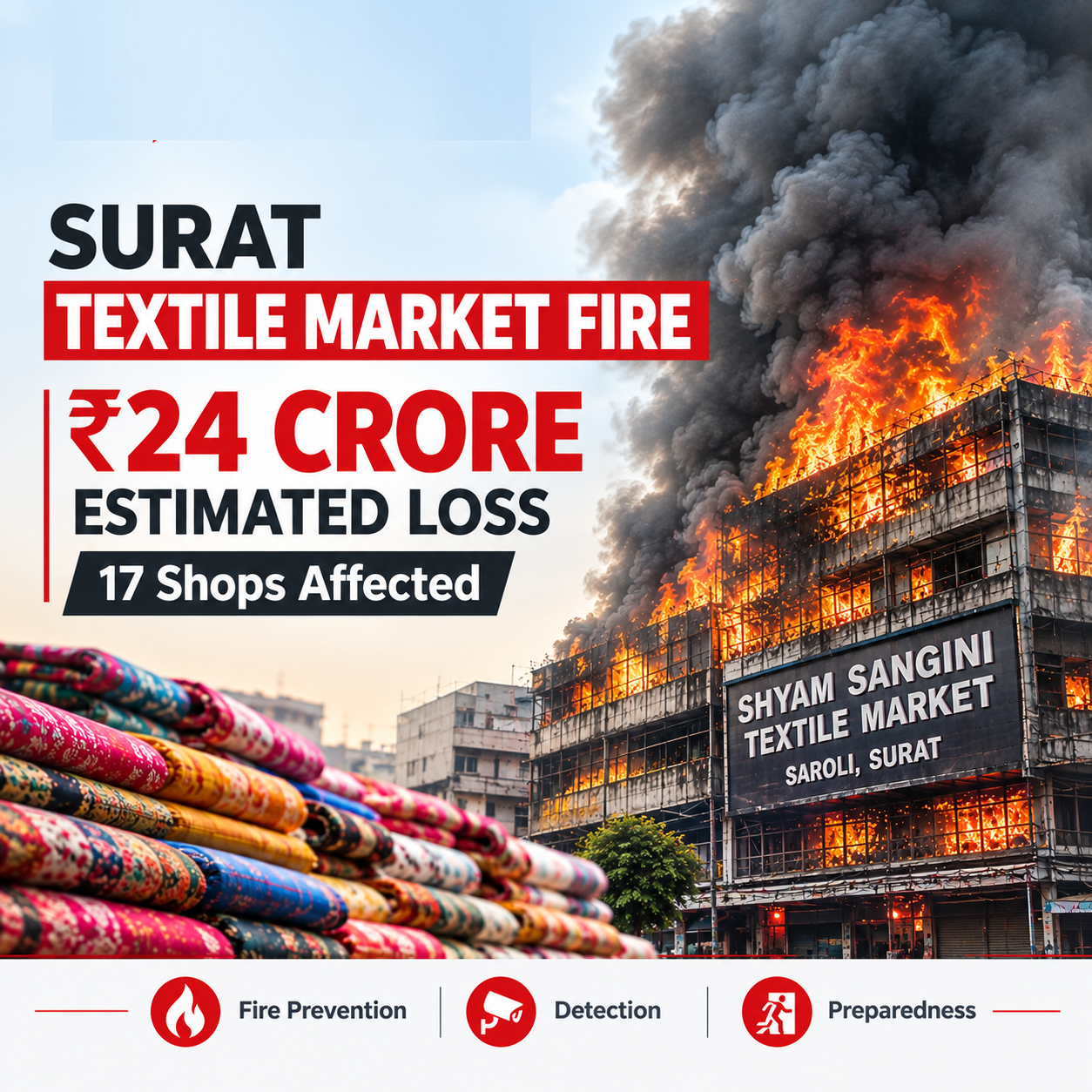
A major fire at the Shyam Sangini Textile Market in Saroli, Surat, has taken a new turn following a police investigation. What was initially treated as a possible accidental fire was later investigated as intentional arson.
According to police, a former employee allegedly entered the market carrying petrol and set fire to textile consignments. Investigators have linked the alleged act to a dispute over ₹10,000 in pending salary dues. The resulting fire destroyed textile goods worth an estimated ₹24 crore across 17 shops.
Incident Details
The fire broke out in the Shyam Sangini Textile Market in Surat during the night. The market is a major textile trading centre and houses a large number of commercial units.
According to the investigation, CCTV footage showed a man entering the market and later moving towards the sixth floor, where textile consignments were stored in the passage area. Police said the person allegedly used a flammable liquid to ignite the packed textile material before leaving the premises.
The fire spread rapidly because of the presence of synthetic textiles, plastic packaging and cardboard materials, which created a high fire load. The blaze subsequently affected multiple shops and also spread towards the fifth floor.
₹10,000 Dispute – ₹24 Crore Loss
Police investigation has reportedly identified the accused as a former accountant/employee of a textile business in the market.
According to police, the alleged motive was connected to a dispute over ₹10,000 in unpaid salary and dissatisfaction with his previous employment. Investigators allege that he deliberately started the fire using petrol.
The incident resulted in an estimated ₹24 crore loss of textile goods, with 17 shops affected. The damaged goods included textile consignments that were reportedly ready for delivery ahead of the festive season.
Firefighting Challenges
The large quantity of combustible textile material contributed to the rapid spread of the fire. Dense smoke, tightly packed goods and the multi-storey commercial layout created additional challenges for firefighting operations.
The fire reportedly continued for many hours before being brought under control. Fortunately, no deaths were reported in the fire, although the financial damage to businesses was substantial.
Key Fire Safety Lessons
1. Fire Prevention Must Include Security
Fire safety is not limited to extinguishers, hydrants and fire alarms. Commercial premises must also consider security, access control and surveillance to reduce the risk of intentional fire.
2. CCTV Monitoring Is Critical
Well-positioned and properly monitored CCTV systems can help identify suspicious activity and support investigations after an incident.
3. Control of Fire Load
Textiles, plastics, cardboard and packaging materials can significantly accelerate fire spread. Proper storage, housekeeping and segregation of combustible materials are essential.
4. Maintain Fire Protection Systems
Fire alarms, hydrants, sprinklers, emergency lighting and other firefighting systems must remain operational and regularly tested.
5. Keep Fire Access Routes Clear
Passages, staircases and fire access areas must never be used for storing textile parcels, cartons or other combustible materials.
6. Employee Awareness and Emergency Preparedness
Regular fire safety training, emergency response drills and awareness programmes can help employees respond quickly during an emergency.
Conclusion
The Surat textile market fire demonstrates how a relatively small workplace dispute can reportedly result in massive property and business losses when combined with deliberate fire-setting and a highly combustible environment.
The incident is a reminder that effective fire safety requires more than firefighting equipment. Prevention, surveillance, access control, good housekeeping, fire protection systems, employee awareness and emergency preparedness must work together to protect lives, property and businesses.


