
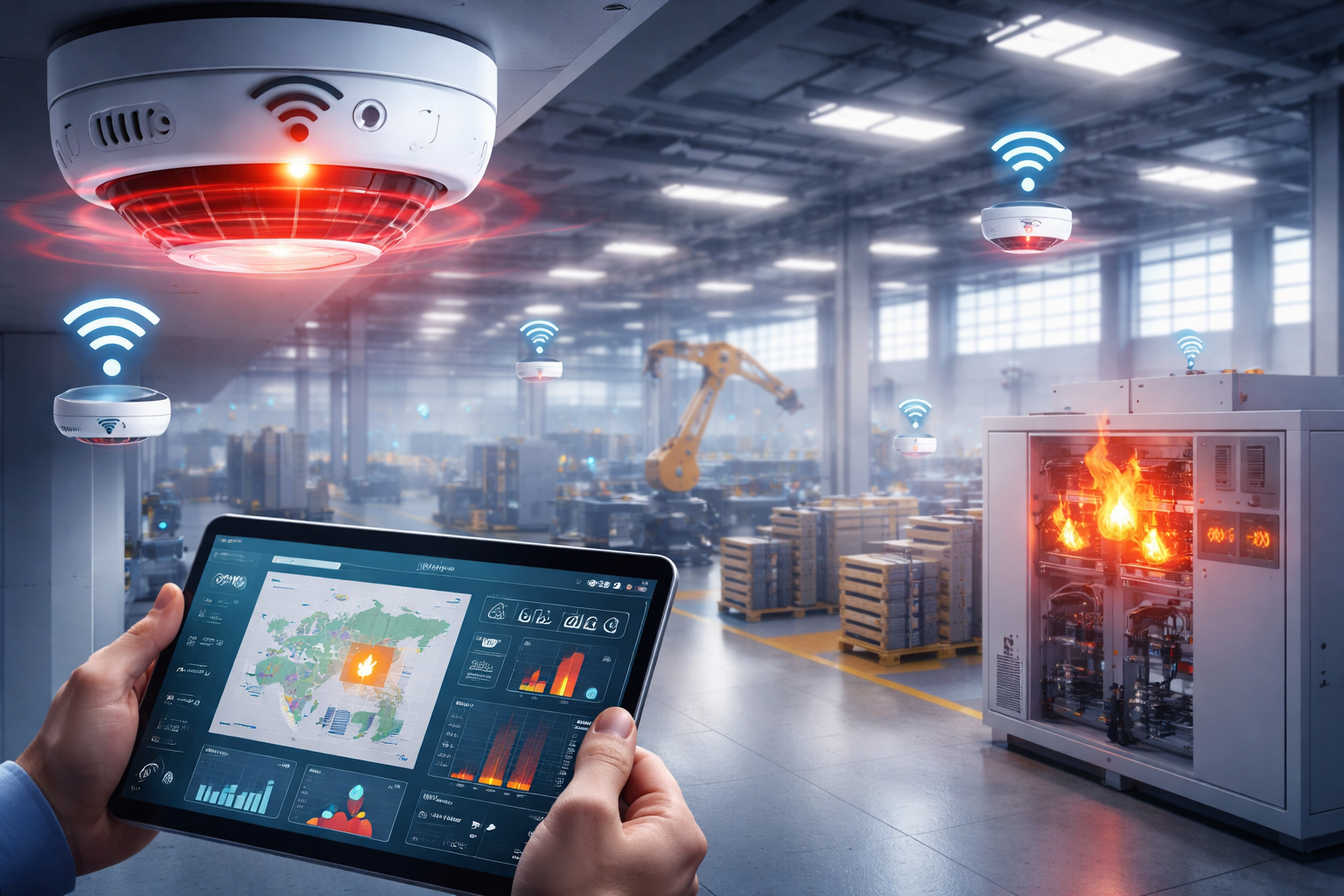
Industrial environments today are becoming more complex, automated, and technology-driven. Traditional fire alarms that rely only on smoke or heat detection are no longer enough to address the growing risks present in modern industries. This is where smart fire detection systems are revolutionizing safety by integrating intelligent technologies capable of identifying threats before they escalate.
Unlike conventional solutions, smart fire detection systems use advanced sensors, connected networks, and data analysis to detect anomalies in real time. These systems are designed to identify early warning signs of fire hazards and alert safety teams instantly. As industries adopt digital transformation, smart fire detection systems are becoming an essential part of modern safety infrastructure, ensuring faster response times and reducing the chances of catastrophic incidents.
The Evolution of Industrial Fire Detection
Fire detection has evolved significantly over the past few decades. Earlier systems primarily relied on manual alarms and basic smoke detectors, which often triggered alerts only after smoke had already spread. Modern industries require faster, more accurate systems capable of identifying fire risks even before flames or smoke appear.
Today’s advanced fire detection systems combine smart sensors, automation, and real-time communication networks. These technologies allow industries to monitor temperature fluctuations, gas emissions, electrical faults, and other potential hazards continuously. The result is a proactive approach to fire safety rather than a reactive one.
How IoT is Transforming Fire Monitoring
The Internet of Things (IoT) has introduced a new level of connectivity in industrial environments. With IoT fire monitoring solutions, multiple sensors installed across a facility communicate with centralized platforms to provide continuous updates about environmental conditions.
These connected devices can monitor parameters such as temperature changes, humidity levels, electrical overloads, and gas leaks. If abnormal patterns are detected, alerts are sent instantly to safety teams through mobile devices or control rooms. This real-time visibility allows organizations to take preventive action before a minor anomaly becomes a major fire emergency.
The Role of Artificial Intelligence in Fire Detection
Artificial intelligence has added another layer of intelligence to fire safety systems. With AI-based fire detection, algorithms analyze patterns from sensors, cameras, and historical data to identify early signs of potential fire hazards.
For example, AI can distinguish between harmless smoke such as steam from machinery and actual fire-related smoke. This significantly reduces false alarms while ensuring genuine threats are detected quickly. AI-powered systems can also learn from past incidents, improving their accuracy and response efficiency over time.
Predictive Safety Through Data Analytics
One of the most powerful features of modern fire safety solutions is predictive fire safety analytics. By analyzing data collected from sensors and monitoring devices, industries can identify patterns that indicate potential fire risks.
For instance, repeated overheating in a specific machine or electrical panel may signal an underlying issue. Predictive analytics allows maintenance teams to address these problems before they lead to ignition sources. This proactive approach not only enhances safety but also minimizes operational downtime and equipment damage.
Strengthening Industrial Safety Infrastructure
The integration of smart technologies is redefining industrial fire safety technology. Modern safety strategies now focus on prevention, early detection, and intelligent monitoring rather than relying solely on suppression after a fire has already started.
Facilities equipped with smart fire detection systems can automatically trigger alerts, activate suppression mechanisms, and notify emergency teams within seconds. This level of automation significantly improves response time and helps contain incidents before they spread across large industrial spaces.
Conclusion
The future of industrial safety lies in intelligent systems that can predict, detect, and respond to hazards with remarkable speed and accuracy. As industries continue to embrace digital transformation, smart technologies like IoT and AI are redefining how organizations approach fire prevention.
By combining real-time monitoring, predictive insights, and automated response mechanisms, these innovations are setting a new benchmark for fire safety. In a world where industrial operations are growing more complex every day, adopting smart detection technologies is no longer optional—it is the foundation of a safer, smarter, and more resilient industrial environment.


