
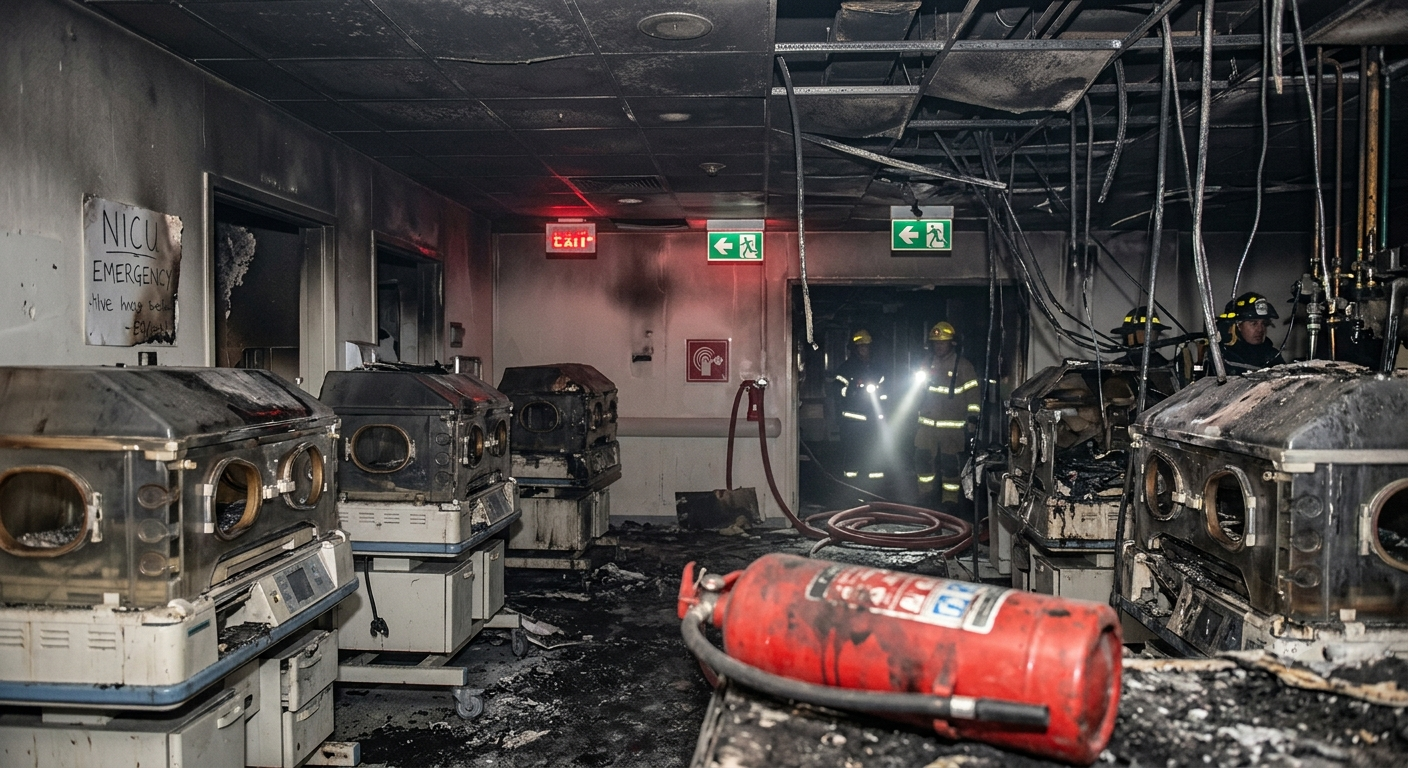
A Tragic Incident That Shook Maharashtra
A devastating fire at the Special Newborn Care Unit (SNCU/NICU) of Amravati District Women’s Hospital has once again brought hospital fire safety into sharp focus. The incident occurred in the early hours of 24 August 2026, when dozens of newborn infants were undergoing treatment in the critical-care unit.
According to initial reports, the fire broke out at approximately 3:15–3:30 AM on the hospital’s third floor. Preliminary reports indicated that a ventilator or associated medical equipment may have sparked or malfunctioned, but the exact cause is still under investigation. At the time of the incident, 39 newborns were admitted, and hospital doctors, nurses and staff carried out an emergency rescue operation. Three newborns tragically died, while 36 infants were rescued.
The Maharashtra government has ordered an investigation, with a committee examining the circumstances surrounding the fire and the functioning of safety and emergency systems. Authorities have also stated that the exact cause and any accountability will be determined through the investigation.
What Makes Hospital Fires Extremely Dangerous?
A fire in any building is dangerous. However, a fire inside a hospital can quickly become a life-threatening emergency because many patients cannot evacuate independently.
Critical areas such as:
- NICU and SNCU units
- Intensive Care Units (ICUs)
- Operation Theatres
- Emergency Departments
- Electrical Rooms
- Medical Gas and Oxygen Areas
require specialised fire safety planning.
In a NICU, the challenge becomes even greater. Newborns may be dependent on incubators, ventilators and other life-support equipment. During an emergency, every second matters. The evacuation process requires trained staff, clear procedures and properly maintained emergency systems.
The Amravati tragedy is therefore not only a local incident—it is a serious reminder for every healthcare facility to reassess its fire and life safety preparedness.
The Critical Role of Fire Detection and Emergency Response
Early detection is one of the most important elements of fire protection.
A properly designed and maintained fire safety system should help detect smoke or fire at the earliest possible stage and initiate an immediate emergency response. Depending on the facility design and applicable regulations, this may include:
1. Fire Detection and Alarm Systems
Smoke detectors, heat detectors, manual call points and fire alarm panels must be properly installed, tested and maintained.
An early warning can provide valuable time for:
- Alerting hospital staff
- Activating emergency procedures
- Informing the fire brigade
- Disconnecting or isolating affected equipment where appropriate
- Beginning patient evacuation
A fire alarm system is effective only when it is operational and regularly tested.
2. Automatic Fire Suppression Systems
Hospitals may require suitable fire suppression arrangements based on building design, risk assessment and applicable codes.
These systems can include:
- Automatic sprinkler systems
- Hydrant systems
- Fire extinguishers
- Hose reels
- Clean-agent systems for specific protected areas
Every system must be properly maintained and periodically inspected.
Reports and eyewitness accounts following the Amravati incident have raised questions about the operation of certain safety systems, although officials have stated that the hospital had undergone regular fire audits and the investigation is continuing. Therefore, the final findings should be awaited before assigning responsibility.
Electrical and Medical Equipment Safety Cannot Be Ignored
Modern hospitals depend heavily on electrical and electronic equipment. Ventilators, monitors, incubators, pumps, air-conditioning systems and other critical devices operate continuously.
This makes preventive maintenance essential.
Healthcare facilities should establish systematic procedures for:
- Periodic inspection of electrical installations
- Preventive maintenance of medical equipment
- Identification of overheating or electrical faults
- Inspection of wiring and distribution panels
- Load assessment
- Testing of emergency power systems
- Proper maintenance records
The exact cause of the Amravati fire is still under investigation. Initial reports pointing to a possible ventilator-related spark or explosion should not be treated as a final conclusion until the official investigation is completed.
Emergency Evacuation Planning: Every Second Matters
Fire safety equipment alone cannot guarantee safety.
A hospital must also have a practical and well-rehearsed emergency response plan.
Staff members should clearly understand:
- What to do when a fire alarm activates
- Whom to inform
- How to use appropriate firefighting equipment
- Which patients require priority evacuation
- Safe evacuation routes
- Emergency assembly or relocation areas
- How to coordinate with the fire brigade
For critical-care areas, evacuation planning must consider patients who cannot move independently.
The prompt response of doctors, nurses and hospital staff at Amravati helped rescue dozens of infants, demonstrating the importance of trained personnel and immediate action during an emergency.
Fire Safety Is Not a One-Time Compliance Activity
Obtaining a fire clearance or completing an audit should never be considered the end of the fire safety process.
Fire safety requires continuous attention.
A strong fire safety programme should include:
- Regular fire risk assessments
- Periodic fire safety audits
- Preventive maintenance
- Testing of fire alarms
- Inspection of hydrant and sprinkler systems
- Fire extinguisher maintenance
- Electrical safety inspections
- Emergency lighting checks
- Staff fire safety training
- Mock evacuation drills
Equipment can deteriorate, systems can develop faults and staff can change. Regular testing and training are therefore essential.
Lessons Every Healthcare Facility Must Learn
The Amravati NICU tragedy offers several important lessons for hospitals, clinics and healthcare institutions.
Early Detection Saves Time
The earlier a fire is detected, the greater the opportunity for safe emergency response.
Maintenance Is as Important as Installation
A fire protection system must be regularly tested and maintained throughout its operational life.
High-Risk Areas Need Special Attention
NICUs, ICUs, operation theatres and electrical rooms require detailed risk assessment and specialised emergency planning.
Training Can Save Lives
Doctors, nurses, technicians, security personnel and other staff should know their responsibilities during a fire emergency.
Mock Drills Are Essential
Emergency plans should be practised. A plan that exists only on paper may not be sufficient during a real emergency.
Independent and Periodic Audits Are Important
Regular review of fire protection and electrical safety systems can help identify potential problems before they become disasters.
Conclusion: Prevention Must Come Before Tragedy
The loss of three newborn lives in the Amravati hospital fire is a heartbreaking tragedy. It is also a powerful reminder that fire safety in healthcare facilities is not merely a regulatory requirement—it is a critical responsibility towards patients, families and healthcare professionals.
Hospitals are places where people come to receive care and protection. For vulnerable patients, particularly newborns and critically ill individuals, evacuation during a fire can be extremely difficult. This makes prevention, early detection, effective suppression systems and trained emergency response absolutely essential.
As the official investigation into the Amravati incident continues, healthcare facilities across the country should use this moment to review their own fire safety preparedness.
The most important question should not be: “Are we compliant?”
It should be:
“If a fire occurs today, are we truly prepared to protect every life inside the building?”
Fire safety must be a continuous commitment—not an action taken only after a tragedy.
Prevention Today. Protection Tomorrow. Because Every Life Matters.


