
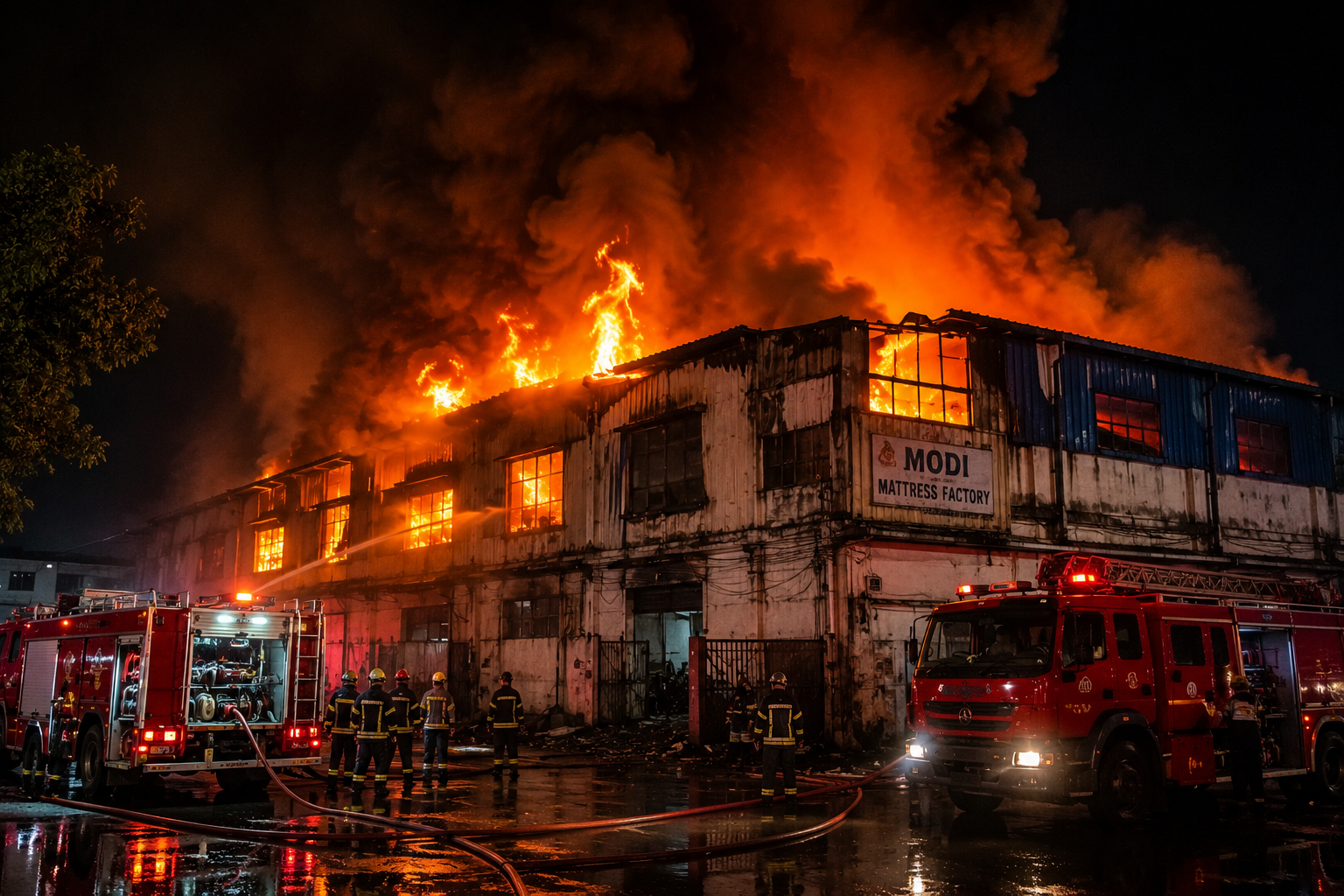
A major fire broke out on 3 September 2026 at the Modi Mattress Factory on Basti Peer Dad Road in Jalandhar, Punjab, creating panic in the surrounding area. The incident reportedly began at around 9:00 a.m., after smoke was noticed coming from inside the factory premises.
The factory was involved in mattress manufacturing, where large quantities of combustible materials were present. Reports also indicated the presence of chemicals inside the premises, which reportedly contributed to the rapid spread of the fire and made firefighting operations more difficult.
What Happened?
According to reports, smoke was first noticed from the factory at around 9:00 a.m. on Thursday. The fire quickly intensified, producing heavy smoke and flames that could be seen from a considerable distance.
The nature of mattress manufacturing means that materials such as foam, fabric, filling materials, packaging and other combustible products can create a significant fire load. In this incident, the presence of chemicals was also reported to have made the firefighting operation more challenging.
Workers Rescued
Around 30 employees were reportedly present at the factory when the incident occurred. Firefighters and rescue teams worked to evacuate people from the premises.
Reports stated that 12 workers were rescued, while one person sustained an injury and was taken for medical treatment. The rescue operation helped prevent what could have been a much more serious loss of life.
Firefighting Operation
The severity of the fire required a large-scale firefighting response. Reports indicated that approximately 8–10 fire vehicles, with some reports specifically citing around 10 fire tenders, were deployed to control the blaze.
Firefighters attacked the fire from multiple directions and continuously used water to prevent the flames from spreading further. At one stage, the fire was reported to be around 95% under control, although structural damage and the collapse of part of the factory shed made rescue and firefighting activities more difficult.
Impact on Nearby Residential Area
One of the major concerns during the incident was the factory’s proximity to a residential area.
As flames and smoke intensified, there was concern that the fire could spread to nearby properties. Some nearby houses were reportedly evacuated as a precaution. This highlights the additional risk created when industrial activities involving highly combustible materials are located close to residential areas.
Possible Cause Under Investigation
The exact cause of the fire has not been officially confirmed. Preliminary reports have suggested that an electrical short circuit may have triggered the incident, but authorities are investigating the matter.
Therefore, the electrical fault should be treated as a suspected cause rather than a confirmed finding until the official investigation is completed.
Why Mattress Manufacturing Requires Special Fire Protection
Mattress and foam manufacturing facilities can present a high fire risk because of the quantity and nature of combustible materials used and stored inside the premises.
Once ignition occurs, fire can spread rapidly through raw materials, finished products, packaging and production areas. Dense smoke can also reduce visibility and make evacuation extremely difficult.
For such facilities, fire safety cannot depend only on portable extinguishers. A comprehensive fire protection strategy is required, based on the actual fire load, building layout, occupancy and manufacturing process.
Key Fire Safety Measures for Mattress & Foam Industries
1. Early Fire Detection
Suitable automatic fire detection systems should be installed throughout production, storage and other critical areas to identify a fire at the earliest possible stage.
2. Automatic Fire Suppression
Where the risk assessment requires it, appropriate automatic suppression systems such as sprinklers should be provided, particularly in high-risk production and storage areas.
3. Proper Hydrant System
A properly designed hydrant and hose-reel network should provide adequate firefighting water coverage throughout the premises.
4. Fire Load Management
Combustible raw materials and finished mattresses should be stored in an organised manner with adequate separation, clear access paths and safe stacking arrangements.
5. Electrical Safety
Electrical panels, cables, machinery and connections should undergo regular inspection and preventive maintenance. Thermographic inspection can also help identify abnormal heating before it develops into an electrical fire.
6. Chemical Storage
Chemicals should be properly identified, segregated and stored according to their hazard characteristics. Appropriate ventilation, spill control and fire protection should be provided.
7. Emergency Exits
Emergency exits, staircases and escape routes must remain clearly marked and free from obstruction at all times.
8. Employee Training
Workers should receive regular training on extinguisher use, emergency evacuation and initial fire response.
9. Mock Drills
Periodic fire and evacuation drills can help employees understand emergency procedures and reduce confusion during an actual incident.
10. Regular Fire Safety Audits
Periodic fire safety audits and risk assessments can identify deficiencies in detection, suppression, electrical safety, emergency exits, storage practices and emergency preparedness before they result in a major incident.
Conclusion
The Jalandhar mattress factory fire is another reminder that industries handling highly combustible materials require proactive fire-risk management, not just emergency response after a fire starts.
The reported rescue of workers demonstrates the importance of an effective emergency response, while the rapid spread of the fire highlights the challenges associated with high fire-load manufacturing facilities.
For mattress, foam, textile, packaging and similar industries, early detection, automatic suppression, adequate firefighting infrastructure, electrical safety, safe storage practices and regular employee training should be treated as essential components of industrial fire safety.
A fire may begin with a single ignition source, but its consequences can become extensive within minutes. Preparedness before the incident remains the strongest line of defence.
For a safer tomorrow, choose the right fire protection today.
— Oustfire Safety Engineers Pvt. Ltd.


