
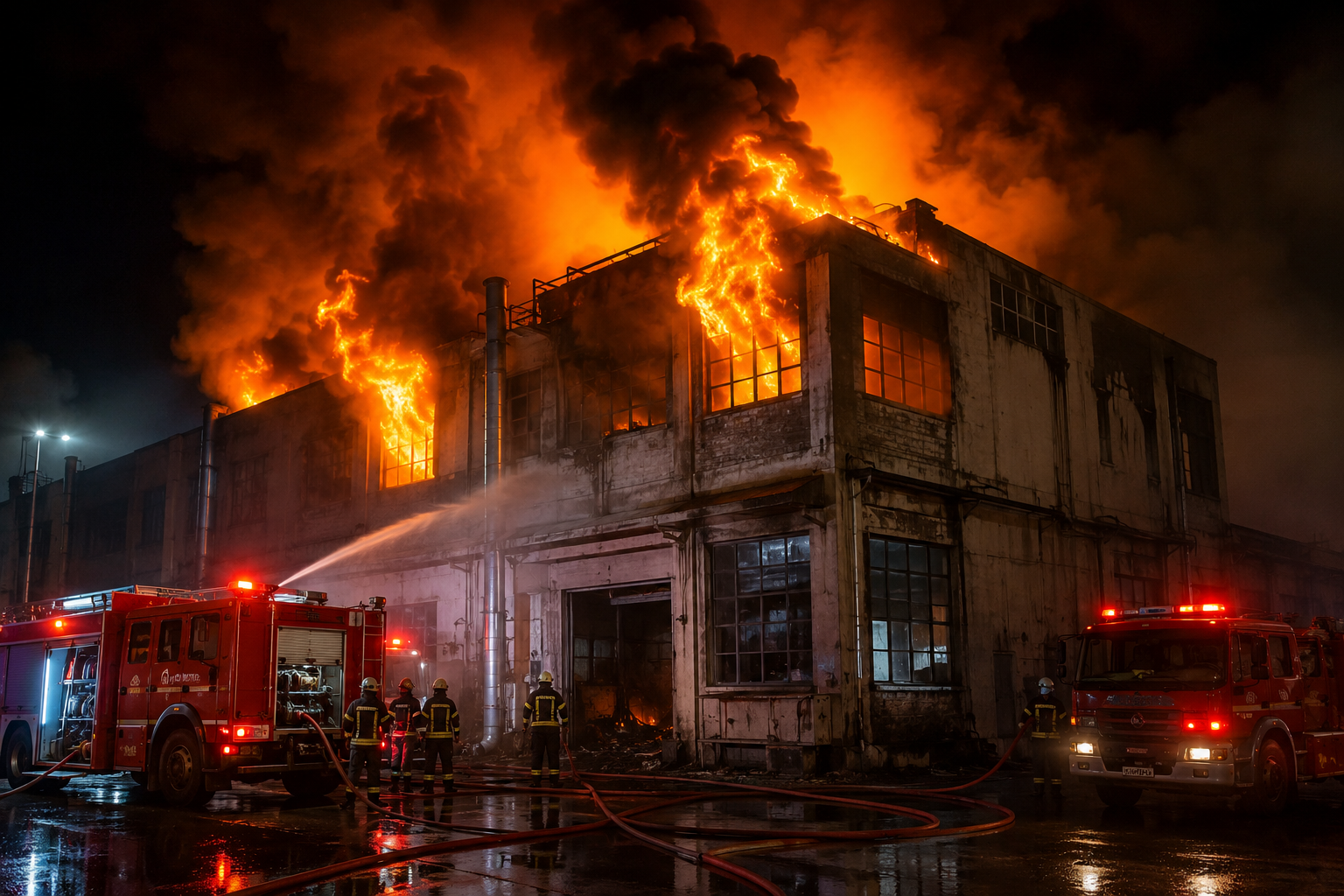
A major fire broke out at a four-storey shoe manufacturing factory in G Block, Sector 63, Noida, Uttar Pradesh, on 2 September 2026 at approximately 8:00 PM.
According to fire officials, the fire originated on the third floor of the factory building. The facility contained materials used in shoe manufacturing, including combustible and flammable materials, which contributed to the rapid spread of the fire across the affected floor.
Fortunately, there were no casualties reported in the incident. The factory had reportedly been closed for the day, with the owner leaving the premises at around 6:00 PM and the employees having already left.
Fire Department Response
After receiving information from local residents at around 9:00 PM, the Noida Fire Department immediately dispatched six fire tenders, including vehicles with a combined water capacity of approximately 22,000 litres.
Firefighters entered the affected building using Breathing Apparatus (BA) sets and carried out firefighting operations from both sides of the building.
After approximately two hours of firefighting efforts, the fire was brought under control and confined to the third floor. The other floors were reported to be safe.
Possible Cause
During the preliminary assessment, fire officials suspected that an electrical short circuit may have triggered the fire.
However, the exact cause remains subject to further investigation. The final assessment of the financial and property damage is also expected to be determined after a detailed audit.
Why Did the Fire Spread Quickly?
One of the major factors highlighted in the incident was the presence of flammable materials used in shoe manufacturing.
Manufacturing facilities dealing with footwear, textiles, packaging, plastics, adhesives, foam, rubber and similar materials can have a significant combustible fire load.
Once ignition occurs, such materials can contribute to:
- Rapid fire growth
- Heavy smoke generation
- Increased heat release
- Faster fire spread
- Difficulty in firefighting and access
- Increased property and business-continuity losses
This incident demonstrates why the fire load of an industrial premises must be properly assessed while designing and maintaining fire protection systems.
Key Industrial Fire Safety Lessons
1. Electrical Safety Must Be a Priority
Electrical faults are a significant potential ignition source in industrial premises.
Regular inspection and preventive maintenance should cover:
- Electrical panels
- Distribution boards
- Cables and wiring
- Motors and machinery
- Overloaded circuits
- Loose connections
- Earthing systems
- Temporary electrical installations
Periodic electrical testing and thermographic inspection can also help identify abnormal heating before it develops into a serious incident.
2. Combustible Materials Require Proper Control
Factories should maintain proper storage and handling practices for combustible materials.
Materials should not unnecessarily accumulate near:
- Electrical panels
- Machinery
- Heat-producing equipment
- Charging stations
- Welding areas
- Other potential ignition sources
Good housekeeping is one of the simplest but most effective fire-prevention measures.
3. Early Detection Can Reduce Fire Losses
An appropriate Fire Detection and Alarm System can provide early warning and allow occupants or security personnel to initiate emergency procedures quickly.
Depending on the facility and risk profile, systems may include:
- Smoke detectors
- Heat detectors
- Manual Call Points
- Fire Alarm Control Panel
- Hooters / Sounders
- Emergency communication systems
4. Fire Protection Systems Must Match the Risk
Industrial facilities should have fire protection systems designed according to their occupancy, fire load and process hazards.
Depending on the risk assessment, this may include:
- Portable fire extinguishers
- Hydrant systems
- Hose reels
- Automatic sprinkler systems
- Fire pumps
- Fire water storage
- Fire alarm and detection systems
- Special hazard suppression systems
The objective should be to detect, control and suppress a fire before it develops into a major emergency.
5. Fire Safety After Working Hours Is Equally Important
This incident is particularly significant because the factory was reportedly closed when the fire started.
A workplace being unoccupied does not mean it is free from fire risk.
Electrical equipment, machinery, charging systems and other installations can remain energised even after employees leave.
Therefore, factories should have proper:
- Shutdown procedures
- Electrical isolation practices
- Security checks
- Fire alarm monitoring
- Emergency response arrangements
- Periodic night inspections where appropriate
Importance of Fire Safety Audits
A periodic fire safety audit can help identify weaknesses before an incident occurs.
An industrial fire safety audit should assess:
- Fire load
- Electrical safety
- Fire detection and alarm systems
- Fire extinguishers
- Hydrant and sprinkler systems
- Emergency exits
- Evacuation routes
- Emergency lighting
- Fire pump and water storage adequacy
- Housekeeping
- Storage practices
- Employee training
- Mock drills
- Statutory compliance
Regular audits and corrective actions can significantly improve the overall safety of an industrial facility.
Conclusion
The Noida Sector 63 shoe factory fire of 2 September 2026 highlights an important lesson for every industrial establishment: fire safety cannot depend only on emergency firefighting after a fire has started.
The fire reportedly began after working hours and spread rapidly across the third floor, partly due to the combustible materials associated with shoe manufacturing. Although the incident resulted in no reported casualties, it had the potential to cause significant loss of property and business operations.
The incident reinforces the importance of electrical safety, proper housekeeping, combustible-material management, early fire detection, suitable suppression systems, regular inspections and employee preparedness.
Fire safety is not a one-time installation — it is an ongoing process.
Detect Early. Respond Quickly. Prevent Losses.
For a safer tomorrow, choose the right fire protection today.
— Oustfire Safety Engineers Pvt. Ltd.


