
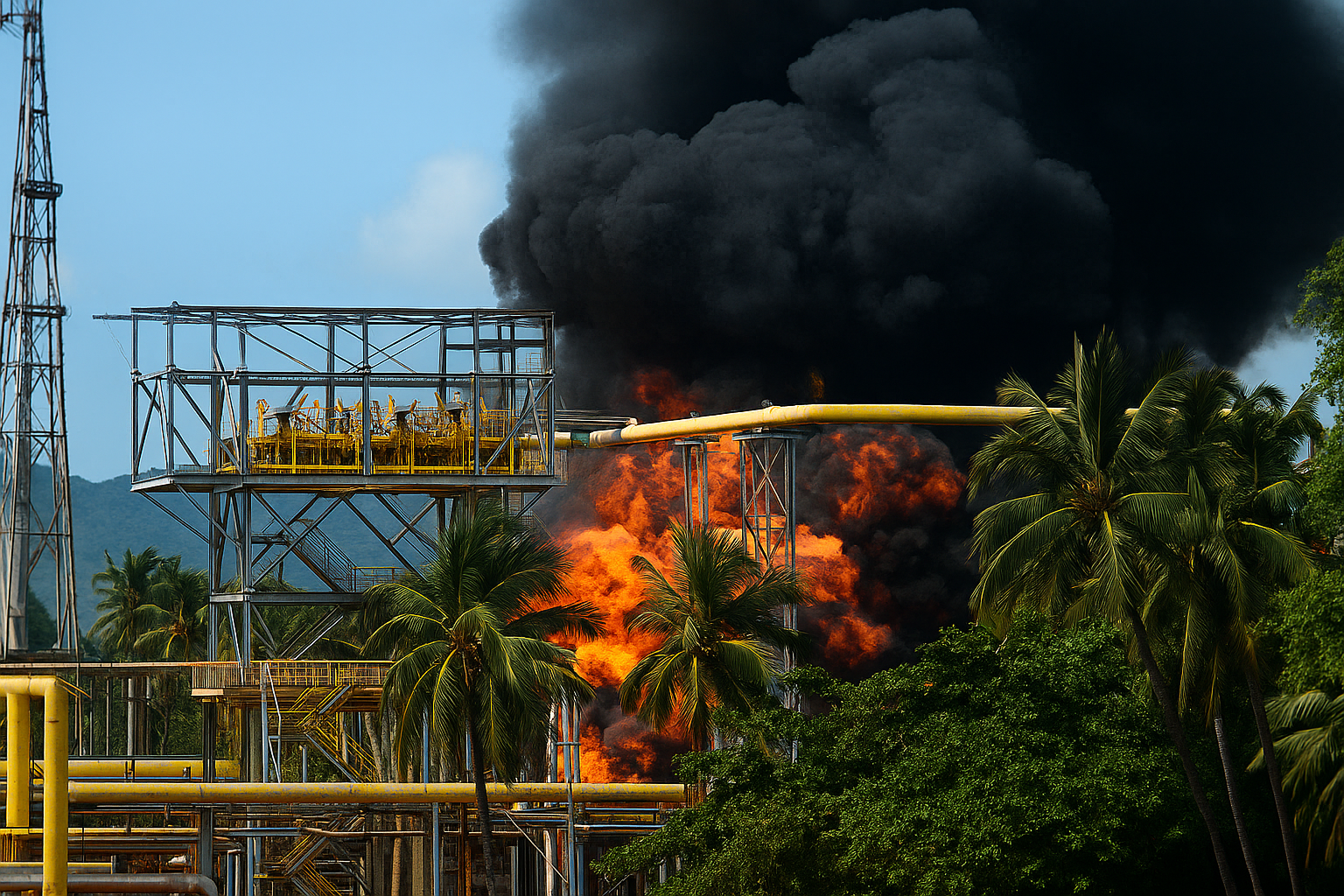
A major fire broke out at the Oil and Natural Gas Corporation (ONGC) plant in Uran, Navi Mumbai, triggering panic in the industrial town and raising serious questions about safety preparedness in high-risk energy facilities. The blaze, which erupted in the early hours, was accompanied by loud blasts that were heard across nearby residential and industrial areas. Dense smoke engulfed the sky, making the incident visible from several kilometers away and sparking widespread alarm.
The ONGC plant at Uran, located about 50 kilometers from Mumbai, is a critical installation involved in processing natural gas and hydrocarbons. Such facilities operate under constant safety protocols, yet the sudden eruption of flames highlighted the vulnerability of even the most advanced energy infrastructures. While firefighting teams swung into action immediately, the scale of the fire made it a challenging operation. Fire tenders from ONGC, Navi Mumbai Municipal Corporation (NMMC), and neighboring industrial units were pressed into service.
Immediate Response and Rescue Efforts
The fire triggered an emergency evacuation as hundreds of workers and staff were rushed out of the plant premises. ONGC’s internal disaster management teams activated their emergency protocols, coordinating with local authorities and the police to secure the area. Villages and housing colonies near the facility witnessed chaotic scenes as people moved away from the thickening smoke clouds.
Firefighters worked tirelessly for several hours, battling extreme heat and the risk of further explosions. Their primary aim was to contain the flames from spreading to adjacent storage tanks and pipelines, which could have escalated the disaster. According to officials, specialized foam-based extinguishers and advanced fire suppression systems were deployed to tackle the hydrocarbon-fed flames.
Despite the magnitude of the fire, authorities confirmed that the situation was eventually brought under control. However, the incident left behind scenes of devastation inside the plant, with charred structures and damaged machinery serving as grim reminders of the blaze.
Eyewitness Accounts
Residents of Uran and neighboring areas described the moments of fear as the fire raged. Some reported hearing “thunder-like” explosions, while others said their houses trembled as the blasts echoed. Social media platforms quickly filled with images and videos showing massive flames leaping into the sky.
“I was leaving for work when I saw smoke rising like a black cloud. Then we heard loud blasts and knew something big had happened. Everyone was running on the streets,” said a local resident.
For many, the incident revived memories of earlier industrial fires in the Mumbai Metropolitan Region, underlining persistent concerns about safety in hazardous zones.
Investigations Underway
As the fire was brought under control, authorities shifted their focus to determining the cause of the blaze. A high-level probe has been ordered to identify whether the fire stemmed from technical failure, human error, or a lapse in safety protocols. ONGC, being a state-run energy giant, operates under strict regulatory norms, but experts say accidents can never be completely ruled out in plants handling flammable substances.
Preliminary findings suggested that a possible leak in a processing unit could have triggered the fire. However, a detailed investigation is expected to shed light on the exact sequence of events. Officials emphasized that safety audits and preventive measures would be strengthened to avoid a repeat of such incidents.
Broader Safety Concerns
The Uran fire has once again brought attention to the risks associated with hydrocarbon processing facilities located close to densely populated regions. Industrial safety experts argue that while companies like ONGC follow global safety standards, the possibility of accidents necessitates continuous upgrades in fire detection, monitoring, and suppression systems.
Frequent mock drills, worker training, and collaboration with local disaster management teams are crucial to minimizing the impact of such mishaps. Experts also highlight the need for stronger community awareness programs so that nearby residents are better prepared in emergencies.
Government and Industry Reactions
The Maharashtra government has called for stringent reviews of all major industrial plants in the region. Senior officials visited the site, assuring that those responsible for any lapses would face accountability. Industry bodies, meanwhile, stressed the importance of balancing energy production with worker safety and environmental safeguards.
Environmentalists also voiced concerns over the potential pollution caused by the fire. Thick smoke containing hydrocarbons and other hazardous compounds is believed to have affected the air quality in the vicinity. Monitoring agencies have been tasked with assessing the environmental impact and recommending corrective measures.
The fire at ONGC’s Uran plant serves as a stark reminder of the immense risks tied to energy production and processing. While the swift action of firefighters and emergency teams prevented a larger catastrophe, the incident underscores the need for constant vigilance, advanced safety systems, and transparent investigations. Beyond the flames and smoke, it highlights a larger issue: the responsibility of industries and authorities to safeguard lives, communities, and the environment in the face of unavoidable hazards. Strengthening safety standards today is the only way to prevent such disasters tomorrow.


